I received some pretty heated comments recently, and today this comment came in so it is perhaps a good opportunity to set the record straight. Dr.Phil wrote this:
An off-topic question... On the one hand I consider you senior, on the other hand I sometimes see contradiction in you. I never intend to offend anyone or hurt anyone. When does asking questions in an unorthodox way become offensive ? When becomes critique offensive ? Where to draw the line ? I for example use bold language in speech which can easily be misinterpreted as an attack. I try to be more subtle and polite but it is not easy. Your criticisms are also by many (mis)understood as being offensive. Where do you draw your line ? How tough can we be in speech ? How hard can our line be in defending the truth, while we our liable to make mistakes. Maybe in the future you can devote a post on this topic. I am also interested in the viewpoints and experiences from the respected visitors on this blog. We all had our clashes and had to find a balance.... between shutting up, standing up, admitting mistakes and maybe even forgiving an offense or asking for forgiveness for offenses committed by ourselves. Forgive me any offense at your feet. And maybe you can shed some light or share experience, in your own time when you feel like it. (you can, but don't have to post this comment)
My response, here in public:
Dear Phil, I have the same problem indeed. My criticism or just plain comparisons between recent teachers and the foundational acaryas (the Six Gosvamis in particular) are often seen as offensive. I have also needed time to learn where to draw the line, and I have withdrawn, on the recent advise of Satyanarayan Prabhu, from off the internet into the private realm with this type of comparitive criticisms. Still I am reaping the fruits of previously made comments on the internet, as I experienced recently with a spate of unpleasant comments by readers. I have also learned to show some respect to teachers that I really dont agree with or that I even really dont appreciate personally, because some of them have a huge flock of followers, some of whom do not know the border between devotional indignation and dangerous fanaticism. The internet is a world wide web and there is no telling as to how many (sometimes dangerous fanatic) people actually surf to one's weblog. My opinion is that one should speak out frankly but without mentioning people by name and without insulting people, and as much as possible in the private realm. Otherwise one may disturb devotees' tender faith in their devotional leaders prematurely and thus do more harm than good. I may have caused such disturbance in the past, for which I offer my apologies once more. And yes, indeed, I can at least speak for myself that I am still in the process of learning, so some of my past criticisms have been misplaced, and I may well realise that for other points in the future as well.
Tuesday, November 14, 2006

Sunday, November 12, 2006
vairāgya needed?
Srī Kānupriya Gosvāmī, Jīvera Svarūpa O Svadharma:
bhakti śāstre evaṁ bhaktaganera ācaranera o upadeśera madhye-o ye bahula parimāne sutīvra samsāra vairāgya-bhāva paridṛṣṭa hoy, tāhā kevala bahirmukha -viṣayāsakta o moha-grasta jīva sakalera mohanidrā bhanga koribāra janya evam pravṛtta bhakta o sādhakadigake sādhana pathe satvara agrasara hoibāra utsāha pradāna koribāra janya bujhite hobe, yehetu 'jnāna vairāgya bhaktira kabhu nahe anga' (CC Madhya 22). nidrita vyakti sahita tāhāra kona-o paramātmīya, madhura ālāpādi dvārā tāhāke ānanda dāna korite āsileo, yemon tāhāra nidrā bhangera janya prathame kathin o karkaśa śabdādi dvārā tāhāke jāgrata korite hoy, tadrūpa visaya madirā pāne nidrita o nirutsāhi jīvake krsna bhajane utsāhita karāi bhakti-pathera tīvra vairāgya vānīra abhiprāya.
"In the devotional scriptures and in the conduct and instructions of the devotees we see many examples of extreme renunciation from material life, but that is only to awaken the conditioned souls who are in the grip of illusion, being attached to sensual enjoyment. It is also meant to enthuse practising devotees who are somewhat attached to material life (pravṛtta) to speed up their progress on the path somewhat. After all, the Caitanya Caritāmṛta (Madhya 22) says: "Neither renunciation nor knowledge are integral parts of bhakti". It may be possible to please a sleeping person with sweet, confidential words, but to wake him/her up in the first place one first needs to make a loud shrieking noise. Similarly one must speak words of stern renunciation to persons that are drunk with the wine of sensuality or who are complacent about worshipping Kṛṣṇa."
Corroborations:
Rūpa Gosvāmī, Bhakti Rasāmṛta Sindhu 1.2.249
'Knowledge and renunciation are helpful for entering the path of devotion, but only in the very beginning. They are never integral parts of devotion."
Jīva Gosvāmī's commentary:
prathamam evety anyāveśa-parityāga-mātrāya te upādīyete tat-parityāgena jāte ca bhakti-praveśe tayor akiñcitkaratvāt tat-tad-bhāvanāyā bhakti vicchedatkatvācca
'"In the beginning" means: only to help the person give up other (mundane) absorptions. Knowledge and renunciation are only marginally helpful in entering the path of devotion. Meditating on these things form an obstacle to devotion."
verse 1.2.250:
'Both cause the heart to be hardened, while Bhakti itself is very tender by nature."
Verse 1.2.251:
Quote from S.B. 11.20.31: "Therefore, knowledge and renunciation are generally not the best means for the yogi who is full of devotion for Me and whose mind is fixed on me."
And:
anāyāse govinda bhajibo (Narottam, Prema bhakti Candrikā 21) "I will effortlessly worship Govinda"
Sādhu bābā disapproved of dry renunciation. he rhymed : Betā - khā, por, bhajan kor" 'My child, eat and dress and do bhajan."
The point of all this? I was deeply impressed with the truth Kānupriya Prabhu thus revealed to me this morning. It reminded me of my blog of 1st november, "Failed Parīkṣā." Perhaps I am taking it all way too seriously and should just chill out a bit?
(Corroborations were added by advaitadas, and are not a part of the text of Kanupriya Gosvami)
bhakti śāstre evaṁ bhaktaganera ācaranera o upadeśera madhye-o ye bahula parimāne sutīvra samsāra vairāgya-bhāva paridṛṣṭa hoy, tāhā kevala bahirmukha -viṣayāsakta o moha-grasta jīva sakalera mohanidrā bhanga koribāra janya evam pravṛtta bhakta o sādhakadigake sādhana pathe satvara agrasara hoibāra utsāha pradāna koribāra janya bujhite hobe, yehetu 'jnāna vairāgya bhaktira kabhu nahe anga' (CC Madhya 22). nidrita vyakti sahita tāhāra kona-o paramātmīya, madhura ālāpādi dvārā tāhāke ānanda dāna korite āsileo, yemon tāhāra nidrā bhangera janya prathame kathin o karkaśa śabdādi dvārā tāhāke jāgrata korite hoy, tadrūpa visaya madirā pāne nidrita o nirutsāhi jīvake krsna bhajane utsāhita karāi bhakti-pathera tīvra vairāgya vānīra abhiprāya.
"In the devotional scriptures and in the conduct and instructions of the devotees we see many examples of extreme renunciation from material life, but that is only to awaken the conditioned souls who are in the grip of illusion, being attached to sensual enjoyment. It is also meant to enthuse practising devotees who are somewhat attached to material life (pravṛtta) to speed up their progress on the path somewhat. After all, the Caitanya Caritāmṛta (Madhya 22) says: "Neither renunciation nor knowledge are integral parts of bhakti". It may be possible to please a sleeping person with sweet, confidential words, but to wake him/her up in the first place one first needs to make a loud shrieking noise. Similarly one must speak words of stern renunciation to persons that are drunk with the wine of sensuality or who are complacent about worshipping Kṛṣṇa."
Corroborations:
Rūpa Gosvāmī, Bhakti Rasāmṛta Sindhu 1.2.249
jñāna-vairāgyayor bhakti-praveśāyopayogitā
īṣat prathamam eveti nāṅgatvam ucitam tayoḥ
Jīva Gosvāmī's commentary:
prathamam evety anyāveśa-parityāga-mātrāya te upādīyete tat-parityāgena jāte ca bhakti-praveśe tayor akiñcitkaratvāt tat-tad-bhāvanāyā bhakti vicchedatkatvācca
'"In the beginning" means: only to help the person give up other (mundane) absorptions. Knowledge and renunciation are only marginally helpful in entering the path of devotion. Meditating on these things form an obstacle to devotion."
verse 1.2.250:
yad ubhe citta-kāṭhinya-hetū prāyaḥ satāṁ mate
sukumāra-svabhāveyam bhaktis taddhetur īritā
'Both cause the heart to be hardened, while Bhakti itself is very tender by nature."
Verse 1.2.251:
Quote from S.B. 11.20.31: "Therefore, knowledge and renunciation are generally not the best means for the yogi who is full of devotion for Me and whose mind is fixed on me."
And:
anāyāse govinda bhajibo (Narottam, Prema bhakti Candrikā 21) "I will effortlessly worship Govinda"
Sādhu bābā disapproved of dry renunciation. he rhymed : Betā - khā, por, bhajan kor" 'My child, eat and dress and do bhajan."
The point of all this? I was deeply impressed with the truth Kānupriya Prabhu thus revealed to me this morning. It reminded me of my blog of 1st november, "Failed Parīkṣā." Perhaps I am taking it all way too seriously and should just chill out a bit?
(Corroborations were added by advaitadas, and are not a part of the text of Kanupriya Gosvami)
Friday, November 03, 2006
Bhakti Rasāmṛta Sindhu comes clean - finally.

After the "Nectar of Devotion" (1969) and Dhanurdhara Swāmi/Victor di Cara's sequel 'Waves of Devotion', it seems the ISKCON-branch of our sampradāya finally has access to a proper representation of Śrīla Rūpa Gosvāmī's 'Bhakti Rasāmṛta Sindhu', translated this time by Bhānu Swāmī. I could only have a brief look at it in the Jīva Institute the day of my departure from India, but in that brief time I naturally curiously browsed to verses 1.2.291-309, and was glad to see that eligibility for rāgānugā bhakti and the difference between it and rāgātmikā bhakti are finally properly presented. Most interestingly, in one of the many footnotes (the one of 1.2.295) it is actually acknowledged that the siddha deha is received from the Guru and the manuals of Gopāl Guru and Dhyānacandra are mentioned. This is not a review (yet), just a preview, because the book is very big and expensive so I didn't buy it. It appears to me at first sight that the complete commentaries of Jīva Gosvāmī and Visvanātha Cakravartī are included, without the original Sanskrit text, but that is no problem because I have these already anyway. By coincidence the only book I brought from India this time is the Bhakti Rasāmṛta Sindhu, but then the Bengali edition of the Gaudiya Math.
Wednesday, November 01, 2006
Failed parīkṣā
I suppose that going to Rādhākund is all about passing the test of tolerance - blasting loud music (Rām-nām, mayoral elections, Bollywood), pert kids, monkeys tearing your clean clothes off the line, no water due to a broken pump, ants pervading your (and Giridhārī's) meals, strangers passing stool in your toilet without even flushing, or stealing your precious water, mosquitos stealing your night's rest, the nicest guys turning out to be rip-offs, always having to lock the door against monkeys, rats and mosquitos, frequent power cuts , too hot to cook a meal (the gas-stove requiring the fan to be switched off), being sick without a nurse around - none of this I tolerated - so far for taror iva sahiṣṇunā. As for tṛṇād api sunīcena - during my whole trip I felt indignation about a bābājī (who are themselves not all famous for their high birth) telling me to sit separately from the others. That test I also failed. This isn't dhyāna-bhūmi (a land of meditation) either - how can you meditate when you are caught between two gangs of big monkeys, ready to tear each other apart? This country is just about tolerating the intolerable. I get the feeling Madangopāl and Sādhu Bābā will not be pleased with me unless and until I pass these tests - and not just for a few weeks but permanently.
Monday, October 16, 2006
Mahāprabhu's own words
ekadā śrīvāsādi yoto bhaktagana
mahāprabhura guṇe gāya korena kīrtan
"One day Śrīvāsa and the other devotees sang the glories of Mahāprabhu in kīrtan"
śuni bhaktagaṇe kohe sakrodha vacane
kṛṣṇa nāma guṇa chāḍi ki koro kīrtan?
When Mahāprabhu heard it He angrily said: 'Why are you abandoning Kṛṣṇa kīrtan? What are you singing?
auddhatya korite hoilo sabākāra mana,
svatantra hoiya nāśābe bhuvana
"Everyone has become so arrogant! This independent behaviour will destroy the world!"
(Caitanya Caritāmṛta, Madhya 1, 269-271)
āmā prati sneha yadi thāke sabākāra
kṛṣṇa nāma vinā nā gāibe āra
"If you all really love Me, then sing of nothing but Kṛṣṇa!"
(Caitanya Bhāgavata)
Thursday, October 05, 2006
Continued debate on Gaura Nitya Līlā
The ongoing discussion on Gaura-nitya lila et al:
Mādhava writes in Vilasa kunja 30 september 2006-
Mādhava: "The friction arises to a great extent from the fact that the Gosvāmīs themselves wrote very, very little of Mahāprabhu at all, what to speak of touching on the specifics of Gaura-upāsanā and līlā.
Advaitadas: "This provides food for thought. Shouldn't we follow suit and thus be real rūpānugīs? Their format should be followed: They offered obeisances to Gaura once in the invocations of their books and then spoke of Rādhā-Kṛṣṇa all the way.
Mādhava: "ārati-songs for Gaura and so forth are also in practise in the line Advaitadas belongs to.
Advaitadas "That is precisely the Gosvāmīs`program - obeisances to Gaura once and then just Rādhā-Kṛṣṇa. Also our adhivāsa kīrtans are the same as in the other lines - Gaura all the way. But this is sādhana bhakti!
Mādhava: In general, there is evolution in mantras in the sampradāya - additional mantras are often learned from śikṣā-gurus and passed on to others.
Advaitadas: When you speak of evolution, isn't that like the `bold innovators` we have left other groups for? Can we call a line that `evolves` like that still a paramparā (succession)? Isn't succession meant to be unchanging?
Mādhava: On dīkṣā-mantras, the Hari-bhakti-vilāsa only mentions Kṛṣṇa-mantra and Kāma-gayatri, with passing mention of some Rāma- and Nṛsiṁha-mantras. Gaura goes undiscussed in the work (as does largely Rādhā), for it seems to be aimed at the broadest audience, not only Gaura's followers.
Advaitadas: This is untrue. In Caitanya Caritāmṛta (Madhya 24) Mahāprabhu gives elaborate instructions to Sanātan Goswāmī about the compilation of Hari-bhakti-vilāsa It has a Gaura maṅgalācaran and is a distinct Gauḍīya Grantha. As Gaura mantra is not there and you admit the mantra`s been in use for just over a century, the conclusion is clear.
Mādhava: Curiously, Gaura-mantra is spoken of in Advaita-prakāśa, one of the very esteemed texts in the line of Advaitadās.
Advaitadas: "This I have already explained on Gaudiya Discussions and on my website www.madangopal.com: It was a procreative mantra meant only for Śacī-mātā and Jagannātha Miśra. Otherwise, it would have been received by us all nowadays, but it isn't.
Madhava: The existence of Gaura's nitya-līlā as an aprakaṭa-prakāśa is questioned. It has not been specifically addressed in any foundational works of the sampradāya, but there is no reason to assume it couldn't be there for those so willing.
Advaitadas: Can it be a spiritual reality without being mentioned in any authorised śāstra?
Thursday, September 28, 2006
Sinning in ignorance and Gaur-līlā - Satya-Nārāyan Dās
I ask Satya Nārāyana Paṇḍitjī about nāmāparādha and sinning in general in ignorance. He says nāmāparādha in ignorance is not as severe as deliberate nāmāparādha He compares it to the woman with the baby who contaminated the kitchen , causing me to decide not to use the kitchen anymore. She displeased me, be it in ignorance, and that is just what aparādha is: displeasing. So it is with inadvertent nāmāparādha He agrees with my point of ignorance being an excuse (see my blog of April 19) He says that in Manu Smṛti greater punishment is given to a brahmin for drinking alcohol than to a śūdra, for instance. An insane person who commits murder is not punished as harshly as a deliberate murderer. It is the intention that counts. Punishment has a purpose, it is a lesson. So yes, a westerner is not punished for drinking and meat-eating as a Hindu or Vaiṣṇava is.
About Gaura līlā he says that the personality of Gaura won't be perceived anymore as one immerses oneself in Rādhā-Kṛṣṇa līlā, but the spirit of Gaura, in which one has done Rādhā-Kṛṣṇa sādhana, will remain forever.
Satya-nārāyan Paṇḍitjī confirms that disputes have always been there in the Gauḍīya Sampradāya, though they have not been mentioned in the Gauḍīya granthas.
Tuesday, September 26, 2006
Evaporation of Gaur-līlā and the mundane Name
Vṛndāvana, September 25, 2006
Yesterday-evening I had a wonderful darśan of one of the senior-most scholars and mahātmās of Vṛndāvana. I ask him two questions. First about Bhaktivinode's statement that Gaura is to be worshipped up to the stage of ruci. He says it is up to the stage of āsakti, which is a near-twin of ruci, but the most interesting thing is that he DOES confirm that Gaura-worship evaporates at a certain stage because Rādhā-Kṛṣṇa is the sādhya. Then, at bhāva and prema-bhakti it is Rādhā-Kṛṣṇa-worship all the way. In a sense Gaura-līlā is nitya because Mahāprabhu thinks of Himself as a sakhī, mañjarī, or Rādhā, but for the sādhaka it dissolves (vismṛti, he forgets) at the stage of āsakti.
I then ask him about the theory that the holy name consists of mundane syllables if pronounced by mundaners. He confirms it, saying that the 10 offences also count for non-devotees, even though they don't know them, just like a child can be cured by medicine inside a sweet, unknowingly it will work anyway. He then quotes Bhakti Rasāmṛta Sindhu (1.3.4)
āvirbhūya manovṛttau vrajanti tat svarūpatām
svayaṁ prakāśa-rūpāpi bhāsamānā prakāśyavat
"Bhāva (created by either rāga- or vidhi-sādhana) manifests within the mind, making it attain its real form. Though it is self-manifest by nature it appears to be manifest by the mental faculties."
Bhāva does not manifest in a mundane mind. hari-nāma is similarly self-manifest but it won't sprout on the barren ground of a non-devotee's heart."
Edited (title changed) July 28, 2008
Sunday, September 17, 2006
Spirit of Subal penetrates Vrindavan
Deity's Modern Attire Creates Disturbance
BY: STAFF CORRESPONDENT
Sep 16, VRINDAVAN, INDIA (IANS) — Priests at the Bankey Bihari temple in Vrindavan yesterday dressed up the main deity in modern attire, sparking massive protests. Priests at the temple dedicated to Lord Krishna, at the request of some fun-loving devotees, gave the deity on Thursday a modern look, complete with jeans and a shirt and wielding a mobile phone. Activists of groups like Bajrang Dal and Vishwa Hindu Parishad (VHP) termed the move blasphemy and burnt effigies of the priests. They demanded that those who defiled the sanctity of the temple be punished. Sanskrit scholars like Chandan Lal Parasher and Nirmal Giri of the Kailash temple here criticised the wanton callousness of the Vrindavan priests. The Rashtriya Lok Dal and Brahmin Sabha also organized similar protests. Some have called for the sacking of the priests.
Sunday, September 10, 2006
Familiarity breeds contempt
Everything is there in the Bhāgavata, including all folk wisdom. Today a friend quoted me this splendid verse of the Bhāgavata, about familiarity, and I like to share it here:
sannikarṣo hi martyānām anādaraṇa kāraṇam
gāngaṁ hitvā yathānyāmbhas tatratyo yāti śuddhaye
Nārada told the sages at Kurukṣetra (S.B. 10.84.31): "In the case of mortals, familiarity breeds contempt. It is like leaving the Ganges (while living on its banks) and going elsewhere for purification."
Tuesday, September 05, 2006
Śikṣāṣṭakam
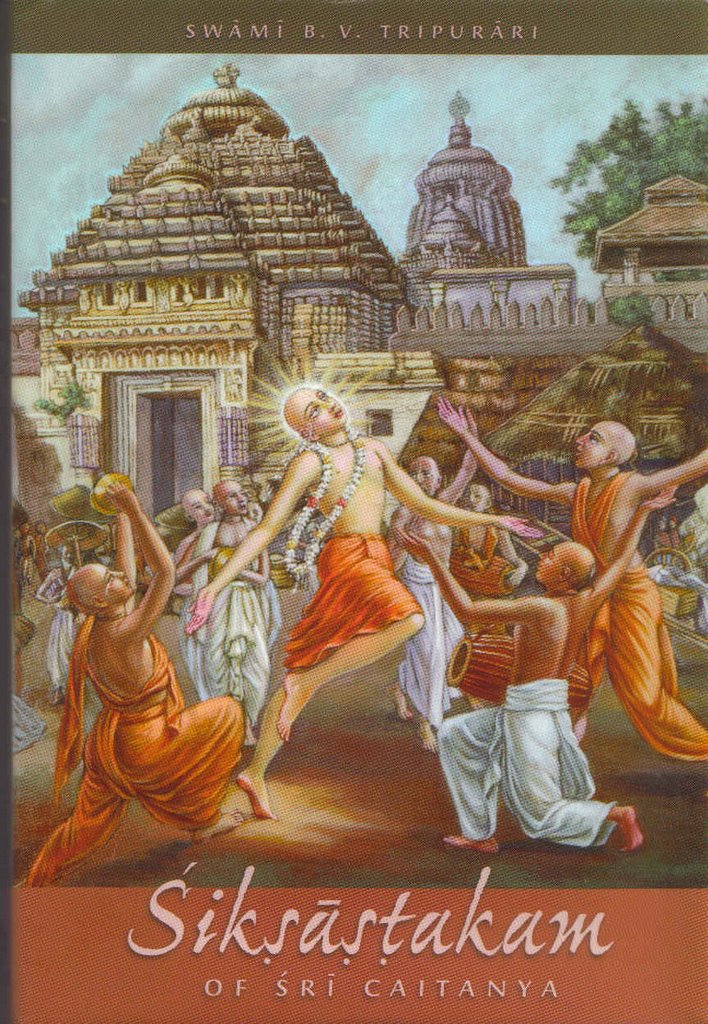
Sri Siksastakam by Swāmi BV Tripurāri
This booklet provides a very nice new elaboration on Mahāprabhu's 8 famous verses, though at various places Swāmījī did get inspired by Traditional Gauḍīya-teachings, notably in his comment on verse 5: On page 85 he makes the point of progressive revelation of the siddha deha based on SB 11.14.26, quoted from Rāgavartma Candrikā, which was first made on Gauḍīya Discussions a year or so ago. On page 86 he has quoted Narottama's āpnāra bhajan kothā nā kohibe yathā tathā and rākho prem hṛdoy bhoriyā, both cornerstone-teachings of Sādhu Bābā, quoted in his biography on my website, and on page 88 he has quoted the point Śrīla Ānanda Gopāla Gosvāmī made in his Vilāpa Kusumāñjali purports that kiṅkara(ī) means kiṁ karomi,"what shall I do?" He and a few other IGM sannyāsīs do have the habit of learning from, getting active support from and even quoting devotees that are considered taboo in their circles, without acknowledging them by name. This in itself is already not very honest, but unfortunately they (I am not sure if Tripurāri Swāmī does this too) sometimes even slam these sources as well, which is really far from proper Vaiṣṇava behaviour.
Interestingly, on page 85 Swāmījī interprets Rāgavartma Candrikā 1.9 to mean that saints, Guru or Supersoul can be alternative sources of the revelation of the siddha deha ("cultivating an inner spiritual identity"). This provides food for thought, though that is not to be literally found in the original text, nor from the context of the verse. The book does give a balanced and fair presentation of the siddha deha issue, which also raises questions about Swāmījī's sources, since the siddha deha-issue is shrouded with mystery, taboo and controversy in his circles. This booklet is fortunately more suitable to a devotee public than some of his previous publications which were clearly targeting the academics. Throughout the booklet Swāmijī gives a nice outline of Rūpa Goswāmī's rasa-tattva, which is badly needed in the western world.
Swāmī did make a few mistakes though. On page 73 he writes: "Although it is true that despite Kṛṣṇa's being primarily lost in love he nonetheless retains his Godhood and can thus hear the prayers of his sādhakas, one can legitimately ask at what stage of spiritual practice a sādhaka's prayers are capable of attracting Kṛṣṇa's personal attention and, furthermore, at what stage a sādhaka's seva becomes līlā-sevā, internal sevā that reaches Kṛṣṇa in his nitya-līlā. while some may insist that Kṛṣṇa personally listens to the prayers of his sādhakas at any stage of sādhana, Thākura Bhaktivinoda says, "The prayers of one who is a śaraṇāgata are heard by Śrī Nanda- kumāra." As we have already learned, śaraṇāgati is complete in the stage of ruci."
Interestingly enough, Tripurāri Svāmi states on page 74 that if one is disheartened by the fact that Kṛṣṇa Himself is not hearing one's prayers, the sādhaka should take solace in the fact that Mahāprabhu as Visvambhara is Jagadīśa (Paramātma) and Kṛṣṇa Himself. Therefore, the sādhaka should pray to Mahāprabhu, presumably until he reaches the stage of ruci when Vrajendranandana Kṛṣṇa Himself reciprocates with his prayers. This (typically Gaura-Kṛṣṇa bheda-buddhi-) theory cannot be verified independently. It is unacceptable that Kṛṣṇa really would not hear the prayers of anyone else but a surrendered soul. I do not know in which context Bhaktivinode says this (Swāmi quotes a song called ṣaḍ aṅga śaraṇāgati), it may be meant as a statement of glorification but cannot be accepted as serious theology. Indeed, it is contradicted by the teachings of Viśvanāth Cakravartīpāda in Rāga Vartma Candrikā 2.1. Also, in the very end of the book (p. 128) Swami translates Svarūpa Dāmodara's famous rādhā bhāva dyuti subalitam naumi krsna svarūpam as 'Pranām to Gaura, who is endowed with Rādhā's countenance and personality'. Here 'Gaura' must be 'Kṛṣṇa'.
Page 73 furthermore contains the controversial statement that '...the baddha jivas are originally manifest from the Paramātmā', whereas from the Bhagavad Gītā it is clear that the jīva has no origin since it is beginningless - na tvevāhaṁ jātu nāsaṁ na tvaṁ neme narādhipāḥ (BG 2.12).
It is not clear what Swāmījī's source is for this theory.
As for the cover design, the artist should have been notified that before 1918 there were no saffron dhotis in the Gauḍīya Vaiṣṇava sampradāya.
The paragraph starting with 'page 73 furthermore' at the end of this blog is added January 13, 2009.
Saturday, September 02, 2006
Prema Vilāsa

While we were in Switzerland my friend Tarungovinda presented me with a copy of Bhūmipati's translation of Nityānanda Dās' 'Prema Vilāsa', which I read during my stay in the alpine āshram. The book itself is controversial enough; it narrates how Kṛṣṇadās Kavirāja died in front of Raghunātha dās Gosvāmī after he heard that his Caitanya Caritāmṛta was stolen by King Bīrhambīr, whereas he actually outlived Dās Gosvāmi for about 30 years.
There is a narration in there how Raghunātha dās Gosvāmī gave his Govardhana śilā and Gunjā mālā to Yadunandanācārya, who rendered service to them, and to Raghunātha Dās himself as well, at Rādhākund, whereas Yadunandanācārya was rather the guru of Raghunātha dās Gosvāmī, and never lived at Rādhākund, nor ever worshipped the Govardhan śilā and Gunjā mālā. Apart from that, the Prema Vilāsa is consistently anti-brāhmana, which is even aggravated by Bhūmipati dās, who was also not exactly brought up in brāhmana-friendly circles. He says that Haridās Thākur gave dīkṣā to a brāhmana named Rāma Dāsa, while the text (already biased against brāhmanas, so who knows if this story is as 'true' as the above-mentioned ones), says: tār śiṣya hoiyā viprer hoilo suddha-mati "The brāhmana's mind was purified by being Haridās' śiṣya." The word śiṣya means both 'pupil' and 'disciple', so we presume it is pupil, since Haridās Thākur is known for having no disciples at all, let alone brāhmanas.
On rāga mārga Bhūmipati writes on page 179: "Before practising rāga bhakti one must make sufficient spiritual advancement. That path is not for everyone. As long as one works under the jurisdiction of the Vedic rules and regulations one cannot serve Kṛṣṇa with spontaneity. Still, one should practise regulative devotion until his heart is firmly attached to Kṛṣṇa Only then can he practise rāga safely." Though the original text does give a caution against whimsical speculations, the above text is nowhere in sight and originates from Bhūmipati's upbringing too.
Furthermore Prema Vilāsa mentions that Vīracandra's boat was torpedoed by Abhirāma Thākur's flute when he crossed the Gangā to take dīkṣā from Advaita Prabhu, while the Advaita Prakāśa says that he was sent back by Advaita Prabhu himself.
Having said all this, Prema Vilāsa should not be dismissed as a baby with the bathing-water either - it does provide many details about the lives of Narottama, Śyāmānanda and Śrīnivāsācārya. Also on a positive note, the book repeatedly mentions the kāma gāyatrī as a dīkṣā-mantra and mentions (chapter 24, page 276) that those in the Advaita Parivāra (Mādhavācārya or Mādhavī sakhī) serve in the yūtha of Visākhā sakhī.
Advise: read with caution, then enjoy.
Friday, September 01, 2006
Śrī Rādhāṣṭamī 2006

anulikhyānantān api sad aparādhan madhupatir
mahā premāviṣṭas tava parama deyaṁ vimṛśyati
tavaikaṁ śrī rādhe gṛṇata iha nāmāmṛta rasaṁ
mahimnaḥ kaḥ sīmaṁ spṛśatu dāsyaika manasām
(Rādhārasa Sudhānidhi – 155)
Thursday, August 31, 2006
In memoriam: Krishnā Dās
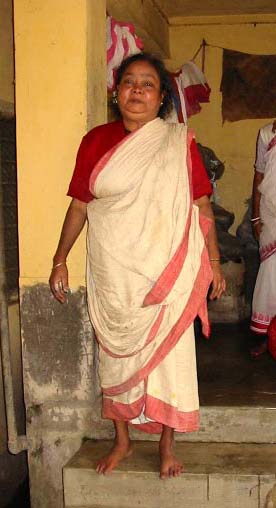 Today I received the sad news that my seniormost Guru-sister Krishnā Dās has passed away, on Tuesday, August 8th, 2006 at 5.25 a.m. local time due to diabetes. Her cremation took place on August 11th. She was born as the first of 7 children of Śrīpād Niranjan Prasād Dās in East Bengal, around the time it was partitioned from India and ceded to Pakistan, in 1947. Around 1960 the family moved to West Bengal, where they settled in Navadvīpa dhāma. Krishnā dās studied Sanskrit in Calcutta when her father met Srī Sādhu Bābā. She gave up her career prospects and joined Bābā in his then very austere āshram, becoming his first ever disciple in 1971. She started with menial services like washing pots, but gradually became Bābā's most trusted confidante, to the extent that Bābā authorised her to give dīkṣā on his behalf after his departure. She has faithfully done that for the last 20 years of her life. As a single woman she bore the heavy responsibility of managing Sādhu Bābā's āshram, organising all the festivals that are held there singlehandedly. As a life-long nun she is survived only by her 94-year old father (!)
Wednesday, August 30, 2006
Hidden motives
I read on another blog that bloggers blog to expose themselves almost narcistically for fame and prestige, to gather followers and admirers or even to seduce women. That is food for some deep introspection. My conscious motive was to get a link to the outside world, as I am physically quite isolated here. I suppose that even if bloggers, yours truly included, have vāsanās (subconscious motives) for fame, women and money, it is still worthwhile to read and write blogs because when one has a lot of knowledge it is one's duty to share the same with the wider world, and if one is unable or unwilling to travel the globe to preach one can still offer a contribution to a world which is suffering from ignorance. Also in the comments box and in its ensuing discussions, the proud blogger is able to learn lessons from his commentators......
Monday, August 28, 2006
rahasya kathā sankat

(Tarun and Advaitadas during kirtan in Spiringen templeroom)
It is hard for a lecturer to facilitate everyone - some members of the audience may not at all be ready for mañjarī bhāva and other types of confidential topics while others (including the lecturer) may be craving for this kathā. I found myself sometimes facing such a mixed audience, perhaps a bit like Śukadeva when he lectured to Mahārāja Parīkṣit's assembly. Kṛṣṇadās Kavirāja faced the same dilemma when composing Caitanya Caritāmṛta (Adi 4.231-232) :
"These topics are all confidential and should not be discussed, but on the other hand, if they are not discussed no one will know of them. That is why I will speak some confidential topics now - the rasik devotees will understand but the fools won't."
Of course one has to judge each individual audience, not that one reveals this to a large audience of ignorant novices and just one qualified rasik. In my case here, I decided to take the risk, like Kavirāja Gosvāmī did.
e sab siddhānta gūḍha - kohite na juwāy; na kohile keho ihāra anta nāhi pāy.
ataeva kohi kichu koriyā nigūḍha; bujhibe rasik bhakta nā bujhibe mūḍha.
"These topics are all confidential and should not be discussed, but on the other hand, if they are not discussed no one will know of them. That is why I will speak some confidential topics now - the rasik devotees will understand but the fools won't."
Of course one has to judge each individual audience, not that one reveals this to a large audience of ignorant novices and just one qualified rasik. In my case here, I decided to take the risk, like Kavirāja Gosvāmī did.
Sunday, August 27, 2006
Correction Vilāpa Kusumānjali

(On the veranda of Śyāma Priya Kuñja, Spiringen, Switzerland - left to right - Mādhava Dās, Advaitadās, Kṛṣṇacandra, Tarun Govinda, Subal Sakhā)

The eka-niṣṭhatā mentioned in Bhakti Rasāmṛta Sindhu 1.2.291 is not a requirement for the rāgānugā- candidate, as is sometimes mistakenly thought, but a symptom of the Vrajavāsīs. This was wrongly translated by me in my 1990-1993 editions of Vilāpa Kusumāñjali, where this translation (combined with that of the following verse) appears in the commentary on verse 57, p.224:
"Those who become greedy after the mood of the Vrajavāsī-devotees, that are called the rāgātmikā-devotees, in a one-pointed manner and that give up all considerations of scriptural injunctions logical arguments after hearing about the sweetness of their loving feelings, are the proper candidates for rāgānugā-bhakti."
The correct translation of the two verses is:
"Anyone who desires to attain the feelings of the residents of Vraja, who are exclusively fixed in rāgātmikā-bhakti, qualifies for rāgānugā-bhakti. The hallmark of the birth of sacred greed after these feelings is that after hearing of the sweetness of their different emotions the conscience disregards scriptural rules or common sense."
I have added a new pdf-file to the "literature"-linktab to my website http://www.madangopal.com/, called Vilāpa Kusumāñjali corrections, with this correction as the first entry.
Brahmins dogs
I was reluctant to blog this, but as I saw a debate going on about cats and dogs on 'gaudiya-repercussions' I decided to add my opinion here.
There is an increasing number of western Vaiṣṇavas that start keeping dogs in their house, many of them claiming a quick-fix brahminhood, taking a second birth without having the first birth to start with, saying they are instead brahmins by quality. These qualities are mentioned in Bhagavad Gītā 18.42 as śama damas tapaḥ śaucam. śaucam means cleanliness, and keeping a dog inside the house is certainly not clean - loose mammals like cats and dogs contaminate the whole house, lock stock and barrel. And such devotees usually keep deities inside their house as well! In India not even the sweepers keep dogs in their houses, so why should then the 'qualified' brahmins here in the west do so? Is there then really such a gap between birth and quality after all? How completely opposite was the attitude and conduct of Śrīla Sanātan Gosvāmī - though he was the greatest sadācārī (devotional puritan) he rather burned his foot-soles on the hot beach-path of Puri than to touch the pūjārīs of the Jagannāth Temple. Of course, Śrīman Mahāprabhu delivered Śivānanda Sena's dog, but Caitanya Caritāmṛta mentions (Antya 1.28): prabhu pāśe bosiyāche kichu alpa dūre, that the dog sat at some distance from the Lord. He did not sit on His lap or lick His face, which I have seen happening with the above-mentioned devotees. Sādhu Bābā also had a dog for a short while, but she too was kept far away from the cooking pots, the kitchen and the āśram's quarters, nor have I seen Sādhu Bābā or anyone else touch her.
A pet-loving 'brahmin' then argued that 1) Kṛṣṇa keeps two dogs too (Vyaghra and Bhramarak), but of course these are transcendentally pure eternally liberated souls, and 2) that rāgānugā bhakti is beyond rules and regulations, but that is not the opinion of Śrīla Rūpa Goswāmī:
"All limbs of vaidhi bhakti, such as hearing chanting etc. are also to be practised in rāgānugā bhakti. This is the verdict of the wise."
If anyone still argues that this inclusion only applies to hearing and chanting, then my question is 'when did the rāgānugā role-models Rūpa and Raghunātha keep dogs inside their kuṭīrs where they worshipped their dieties?'
Viśvanātha Cakravartīpāda comments on this verse that only meditation on Dwārkā, mudra, nyāsa and worship of Kṛṣṇa's queens are exempt for rāgānugā sādhana.
There is an increasing number of western Vaiṣṇavas that start keeping dogs in their house, many of them claiming a quick-fix brahminhood, taking a second birth without having the first birth to start with, saying they are instead brahmins by quality. These qualities are mentioned in Bhagavad Gītā 18.42 as śama damas tapaḥ śaucam. śaucam means cleanliness, and keeping a dog inside the house is certainly not clean - loose mammals like cats and dogs contaminate the whole house, lock stock and barrel. And such devotees usually keep deities inside their house as well! In India not even the sweepers keep dogs in their houses, so why should then the 'qualified' brahmins here in the west do so? Is there then really such a gap between birth and quality after all? How completely opposite was the attitude and conduct of Śrīla Sanātan Gosvāmī - though he was the greatest sadācārī (devotional puritan) he rather burned his foot-soles on the hot beach-path of Puri than to touch the pūjārīs of the Jagannāth Temple. Of course, Śrīman Mahāprabhu delivered Śivānanda Sena's dog, but Caitanya Caritāmṛta mentions (Antya 1.28): prabhu pāśe bosiyāche kichu alpa dūre, that the dog sat at some distance from the Lord. He did not sit on His lap or lick His face, which I have seen happening with the above-mentioned devotees. Sādhu Bābā also had a dog for a short while, but she too was kept far away from the cooking pots, the kitchen and the āśram's quarters, nor have I seen Sādhu Bābā or anyone else touch her.
A pet-loving 'brahmin' then argued that 1) Kṛṣṇa keeps two dogs too (Vyaghra and Bhramarak), but of course these are transcendentally pure eternally liberated souls, and 2) that rāgānugā bhakti is beyond rules and regulations, but that is not the opinion of Śrīla Rūpa Goswāmī:
śravaṇotkīrtanādīni vaidhi bhaktyuditāni tu
yānyaṅgāni ca tānyatra vijñeyāni manīṣibhiḥ
(Bhakti-Rasāmṛta Sindhu 1.2.296)
"All limbs of vaidhi bhakti, such as hearing chanting etc. are also to be practised in rāgānugā bhakti. This is the verdict of the wise."
If anyone still argues that this inclusion only applies to hearing and chanting, then my question is 'when did the rāgānugā role-models Rūpa and Raghunātha keep dogs inside their kuṭīrs where they worshipped their dieties?'
Viśvanātha Cakravartīpāda comments on this verse that only meditation on Dwārkā, mudra, nyāsa and worship of Kṛṣṇa's queens are exempt for rāgānugā sādhana.
Sunday, August 20, 2006
Readings from Bhakti Sandarbha
Here in Spiringen I had the chance to read the Bhakti-Sandarbha rendering by Satya-nārāyan Dās. Here are some excerpts:
Paragraph 128 - The verses of Devahūti (SB 3.33.6-7), saying that the dog-eater who chants can perform Vedic yajñas, is not literal but only shows him being worshipable - tasmāt pūjyatva mātra tātparyam ityabhipretya. Śrīdhar Swāmī confirms it: anena pūjyatvaṁ lakṣyate.
Paragraph 152 vyādha hatasya pakṣinaḥ kukkura mukha gatasya tat palāyana vṛtyā bhagavan mandira parikramaṇa phala prāptya tādṛśatva prāptir iti -
"A bird died while in the mouth of a dog who ran around a temple and thus got liberated, since he accidentally did parikrama. "
Paragraph 153 - ādhunikānāṁ ca śruta śāstrānām apyaparādha doṣena śrī bhagavati śrī gurau tad bhaktādiṣu cāntarānādarādāv api sati bahis tad arcanādy arambhaḥ kauṭilyam
"Modern people make offences to the śāstras, inwardly disrespecting the Lord, Śrī Guru and their devotees, hypocritically worshiping them externally."
Paragraph 159 - sat sādhakasya manuṣya deha rirakṣisa jāyate sāpyupāsanā vṛddhi lobhena na tu deha mātra...
"The genuine sādhaka preserves the body for bhajan, not just for mere preservation. He is greedy to expand his worship. "
mūḍhānāṁ tu mūṣikādinam aparādhe'pi siddhis tathaiva yukta....atikramyodayat
"The mouse who ate the burning ghee-wick and thus died was an offender but he had no bad intention, so he transcended his offence at the time of death."
atha bhaktyādi kṛtābhimāna...."Pride of bhakti is caused by aparādha and results in Vaiṣṇava-aparādha."
tato'parādhābhāvāt tat kṣayārtham na tatravṛttyāpekṣā -
"Only one who is free from aparādha can chant the holy name at the time of death."
Paragraph 167 - S.B. 7.9.11 Śrīdhara Swāmī's comment - "Bhagavān is the original face and the living entity the reflection. The reflection is only beautified by decorating the original, not the reflection itself. Similarly the jīva is not gratified by pleasing himself but by pleasing Bhagavān."
Paragraph 168 - tatra caihikam niṣkāmatvaṁ bhaktyā jīvika pratiṣṭhādy upārjanam yat tad abhāvamayam api boddhavyam - viṣṇum yo nopajīvati iti gāruḍe śuddha bhakta lakṣaṇāt
"Pure bhakti means one does not perform it for a livelihood or for fame. The Garuḍa Purāṇa says one should not use Lord Viṣṇu for a livelihood."
Paragraph 172 helā tvaparādha rūpāpyabuddhi-pūrvaka kṛta ....vaiparityena badhyate
"If contempt is expressed unconsciously it does not obstruct bhakti because there is no insincerity. Those, however, who are proud of their petty knowledge and deliberately make offences have their bhakti curtailed."
Paragraph 173 - yat tu yaḥ smaret puṇḍarīkākṣaṁ sa bāhyābhyantara-śuciḥ ity ādau śraddadhānā api snānādikam ācaranti | tat khalu śrīman-nārada-vyāsādi-sat-paramparācāra-gauravād eva | anyathā tad-atikrame’py aparādhaḥ syāt | te ca tathā maryādāṁ lokasya kadarya-vṛttyādi-nirodhāyaiva sthāpitavanta iti jñeyam ||
"The fact that the famous verse says that whoever remembers Pundarikaksa is pure within and without does not mean one should not bathe. One must uphold the dignity of the sat parampara of Narada and Vyasa, otherwise one commits an offence."
yasmāc ca śaraṇāpattau vakṣyamāṇāni ānukūlyasya saṅkalpaḥ ity ādīni liṅgāni | tathā vyavahāra-kārpaṇyādy-abhāvo’pi śraddhā-liṅgaṁ jñeyam | śāstraṁ hi tathaiva śraddhām utpādayati |
ananyāś cintayanto māṁ ye janāḥ paryupāsate | teṣāṁ nityābhiyuktānāṁ yoga-kṣemaṁ vahāmy aham || [gītā 9.22]
About the process of surrender it is said: "One should accept what is favorable and reject what is unfavorable' etc. One should know that a symptom of faith is also the absence of mundane miserliness. Scripture also demonstrates this type of faith, as in Bhagavad Gītā 9.22 - "For eternally engaged devotees, who worship Me by thinking of Me exclusively, I carry what they lack and preserve what they have".
In other words, miserliness is a result of devotee's lack of faith that, when he has spent his last cent, Kṛṣṇa will not provide his next money."
The ill behaviour described in Bhagavad Gita-verse 9.30, 'api cet suduracaro' is sinning on strenght of the holy name, the 7th offence to the chanting of the holy name; the verse only serves to glorify bhakti (bhakti prasamsayam eva) and is not to be taken literally.
My own separate realisation: An initiated devotee is no more obliged to his pre-dīkṣā-teachers: dīkṣā-kāle bhakta kore ātma samarpana, sei kāle kṛṣṇa tāte kore ātma-sama' "At the time of dīkṣā the bhakta surrenders his very self - Kṛṣṇa then considers him equal to himself." (CC Antya 4.192) When meeting the sat Guru one should erase everything that preceded.
Gita quote 9.22 added December 27, 2012, originally posted on MSN spaces July 18, 2005
Saturday, August 05, 2006
Origin of the siddha deha
This is the gist of a discussion I had with Kṛṣṇa Dās (Robert
Gafrik PhD Slovakia) on the siddha deha:
Advaitadās: In connection with the origin of the siddha deha
the following text is quoted from Prīti Sandarbha (10):
vaikuṇṭhasya bhagavato jyotir-aṁśa-bhūtā vaikuṇṭha-loka-śobha-rūpā
yā anantā mūrtayas tatra vartante tāsām ekayā saha muktasyaikasya mūrtir
bhagavatā kriyata iti vaikuṇṭasya mūrtir iva mūrtir yeṣām ity uktam
"In the spiritual world, the Supreme Lord has unlimited
spiritual forms; they all are expansions of Himself illuminating that world. Of
these mūrtis Bhagavān gives one mūrti to each liberated soul. Their mūrti is
like the one of Lord Vaikuṇṭha."
The translation is mine, but I am getting my doubts about
the word kriyata here. Some people say that this word means that Kṛṣṇa is
creating a spiritual body for the soul here."
Kṛṣṇa Das: "The root kṛ in Sanskrit can actually have
any meaning, it does not mean just "create". It is akin to the
English "do". One can express every activity with it. Kriyate in the
passage does not mean that the spiritual body is created. The text itself says
that mūrtayas tatra vartante, they are there eternally, tāsām (out of them)
ekayā saha (with one) muktasya (of the liberated) ekasya (of the one) mūrtir
(body) bhagavatā (by the Lord) kriyate (assign), i.e. the Lord awards one of
the bodies that eternally reside in Vaikuṇṭha (in an inactive state) to the
liberated one. vaikuṇṭasya mūrtir iva mūrtir yeṣām, the body that one is given
is similar (iva) to that of Lord Vaikuṇṭha. Jīva Goswāmī wants to explain that
one achieves bhagavat-tulyatvam at the stage of utkrānta-mukti (gone forth or out, gone over
or beyond , passed , surpassed, trespassing , exceeding – Monier Williams) by
quoting the Bhāgavata verse (3.15.14 vasanti yatra puruṣāḥ) there (utkrānta-mukti-daśāyāṁ
tu teṣāṁ bhagavat-tulyatvam evāha). There is nothing like that that the
spiritual body is created at some time. It is eternal. It is aprākṛta. The fact
itself should make it clear that it can't be created. "
Advaitadās: "Thank you for that. The word kriyata is
the key to the whole issue and as you said it can have any meaning. That makes
it extra hard and intriguing. The word vartante means 'they stay there
eternally' because it is in present tense and Jīva Gosvāmī said that present
tense indicates eternity? And also your addition 'in an inactive state' is not
clear to me from the mūla text. If we cannot come to a definite conclusion
about the Prīti Sandarbha text, is there any other text in śāstra you could
provide to prove your point that the siddha deha is not created?"
Kṛṣṇa Das: "As far as I know there is only the discussion
in Prīti Sandarbha and the prayujyamāna-verse (SBhāgavata 1.6.28 or 29, according to
edition) with commentaries that deal with the siddha
deha. Apart from that there is a discussion about this issue in the 4th chapter
of Vedanta-sūtras, where it is said that the liberated soul can exist with or
without a body. It would be good to see commentaries of the ācāryas on the sūtras.
I don't have them here now. If both meanings are possible one has to see the
context. And I would say that the context rules out the interpretation that the
body is created because in the previous sentence Jīva Gosvāmī says that mūrtayas
tatra vartante. They are there and the Lord gives (kriyate) one such form to
the devotee. This is a natural sequence. Otherwise one will have difficulty to
explain why he says that the mūrtis are already there. Yes, vartante is in
present tense; more precisely, it is something we would call present simple in
English, and the tense mostly indicates that something happens or is always,
ie. eternally. The verb vartante itself denotes existence. In addition,
siddha-deha or spiritual body cannot be created because it is transcendental.
We can say only about material things that they are created. The logic behind
my phrase "in inactive state" is that we are limited by our language
and our experience when we talk about transcendental things. These things are
actually acintya but we need some explanation so we say that it is in an
inactive state before one is awarded such a body. The verse from Bhakti Rasāmṛta
Sindhu (1.2.294-5) about siddha-deha does not mean that the body is created. My
Guruji once told me that it descends into the mind of the devotee in a
"shadow" form. It is eternal but makes itself manifest in the mind.
The body has a beginning only from our material perspective."
Subscribe to:
Posts (Atom)