Wednesday, October 26, 2005

Rādhākund Snān

I meet my Gurubhāi Ṛtu Vijay, who says he lived with me in the āśram, but that escapes my memory. He lives in Bahulā-van with Brajabāsī Gurubhāis.

October 25
There is a clear decline in the number of Bahulāṣṭamī-bathers - it's much less than last year.

October 24
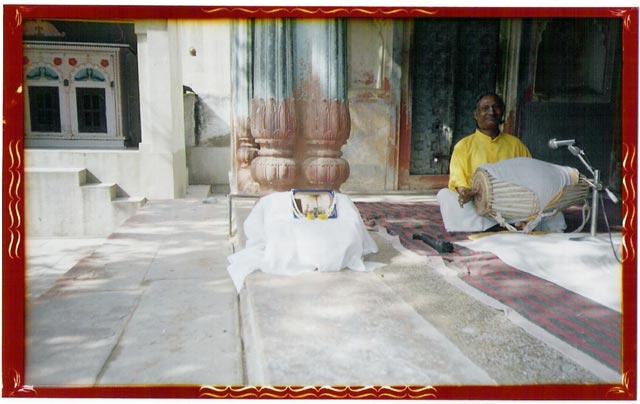
A new concrete casing is made around Bābā's smṛti-phalak.

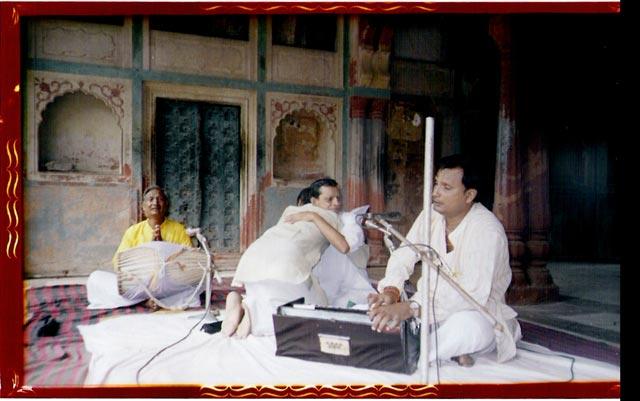
The eve of Rādhākuṇḍa-Snān is cosy. In the Samādhi Mandir an unlikely alliance of Aindra's Iskcon kīrtan-group with Brajabāsīs raises the roof there, while Anup Gosai enters the village from the other side with his supporters holding a banner with his name on it. Like most other devotees, I don't bathe at midnight but just go to bed.

October 23
In Kṛṣṇa Bhāvanāmṛta, Śrī Rādhikā complains that after the light has shone, the darkness gets even deeper. I experience that in the material sense when I drive back to Rādhākuṇḍa on the bike in the dark. When a tractor with its big light on drives towards me I get blinded and when it passed by I see even less in the dark than before.

Studies - Rādhā Govinda Nātha commentaries on Caitanya Caritāmṛta -

CC Antya 14.45 - dwādaśa is the name of a yogi's daṇḍa.

CC Antya 14.67 - Now the object has outgrown its vessel. Rādhā's bhāva is able to tolerate the whirlwind of rādhā-bhāva, but Kṛṣṇa (as Gaura) isn't. Rādhā is a solid gold vessel and Kṛṣṇa a gold-plated copper vessel. mādana mahābhāva is like nitric acid, which a solid gold vessel can easily handle, but a copper one cannot. Rādhā's complexion is a protective shield. In Braja Rādhā-Kṛṣṇa are separate entities, but in Gaura līlā they are joint, that's why Gaur's bones slacken (?) From here on Rādhā-Govinda Nāth gets very confusing. Rohiṇī-nandan calls it 'unnecessary comments'. The point is, Gaur isn't Rādhā but Kṛṣṇa with Rādhā's bhāva, going through a learning process - He discovers Mahābhāva. Hence Rādhā-Govinda Nāth's bewildering comparisons (not mentioned in this blog) don't work. Why is there otherwise Gaur-līlā? The vikāras take place because Kṛṣṇa learns mahā-bhāva for the first time.

Sunday, October 23, 2005

A land of thieves

In the evening Navadvīp Gosvāmī, the grandson of Tinkuri Gosvāmī, shows me he only got a tiffin with some prasād and no dakṣinā from Mathurā Prasād. He affectionately consoles me that in a 'corer desh', a land of thieves, this is a donation to a Brajabāsī. At least Giridhārī, Bābā, my mother and myself get a big feast today. Navadvīp Gosvāmī invites me for a kīrtan in front of Tinkuri Bābā's āśram. They do sing the name of the Guru in kīrtan, like in Iskcon, too.

Studies -
CC Antya 5.82 - Rādhā Govinda Nāth - nija labhe mane - It's an exchange of love between the Lord and the bhaktas as in Gītā 4.11 - ye yathā māṁ prapadyante.

CC Antya 5.118 - Once a rich devotee had abhiṣekh done of his deity as a part of its installation. He asked the pujārī to do the abhiṣekh for the 2nd time, and only when he saw the deity blinking His eyes, as ordinary people do when they are showered, he had the abhiṣekh stopped, knowing that now Kṛṣṇa was really present in the deity.

CC Antya 6.9 - Mahāprabhu is only occasionally in Kṛṣṇa-Bhāva - His Rādhā-bhāva is predominant. Also, the gopis went into Kṛṣṇa-bhāva when Kṛṣṇa left them during the Rāsa-dance.

CC Antya 6.47 - Nitāi called Raghunāth Dās Goswāmī a thief because he tried to attain Gaura without first taking shelter of Him (Nitāi).

October 21 - Vaiṣṇava pada Dās tells me that Ānandī is not the same person as Prabodhānanda - he lived in the 18th century. He didn't write a tika to Rādhā Rasa Sudhānidhi because that, plus Vilāp Kusumāñjali, was locked up until just 50-70 years ago!

CC Antya 6.169 - chale - Mahāprabhu earlier told Raghunāth Dās Gosvāmī (Madhya 16) that Kṛṣṇa would show him the trick to escape. That is now happening. Kṛṣṇa made Yadunandanācārya forget the possibility that Raghunāth could escape.

CC Antya 6.198 - śuddha vaiṣṇava nohe - They tried to tie Raghunāth down by marrying him with an attractive teen and they withheld 8 lakhs of Rupees from the Governor for their own use.

Antya 6.236 - One should not eat nicely, because prasād is for honoring, not enjoying. The sun-rays are straight, but may get crooked when they are reflected on a crooked object. Similary prasād is pure, but the way in which we eat it may not be. Haridās Thākur honored prasād by just taking a little piece (Antya 11.20)

Antya 10.8 - Disobedience can be pleasing. If I am sick and I tell my relative to go to sleep but instead my relative stays up all night to nurse me, that is very pleasing. Nitāi's example should not be imitated by ordinary sādhakas, though.

Antya 12.118 - 'I actually brought the oil for you, but since you don't accept it, it is as if I didn't bring it at all."

Antya 14.23 - According to Rādhā Govinda Nāth Mahāprabhu didn't mind the Oriyan woman mounting his shoulder because he hadn't yet returned from an āveśa in Rāsa līlā. Whereas he was grateful to Govinda for stopping him embracing the deva dāsī who sang Gita Govinda.

Antya 14.34 - Kṛṣṇa held no flute and Subhadrā and Balarām were there, so Mahāprabhu's vraja-āveśa was broken.

Thursday, October 20, 2005

Bābā's tirobhāva

My feast for Bābā's tirobhāva and my mother's memory is more or less a feast for Mathurā Prasād and his clan. I don't see any other invitees taking prasād. First rabari, then puris - Brajabāsī style! Rādhā-charan Pānḍā doesn't show up. I present sweets to my friends too.

Gauḍīya Maṭh's B.P. Puri Mahārāj says that mediating on a gopī-body in an unripe stage results in a material woman's birth, but Kṛṣṇadās Kavirāj writes in his Sāraṅga Raṅgadā-ṭīkā to Kṛṣṇa Karṇāmṛta that one should meditate on one's own desired siddha deha also before rati (the stage of enlightenment) is there. So what will happen with all those who follow Kṛṣṇadās Kavirāja then?

October 19, 2005
Rādhācharan Pāṇḍā isn't pleased that I hold Bābā's virahotsava in Mathurā's place. When I tell him we can do it in his place next year he says: "Who knows who will be around then?" It's embarrassing.

Studies -
CC Antya 4.221
Rādhā-Govinda Nāth thinks that Gopāl Bhaṭṭa Goswāmī had already compiled a Vaiṣṇava Smriti, so Sanātan Goswāmī was satisfied that Mahāprabhu's order to him (Sanātan) was already fulfilled and he just wrote a ṭīkā.

CC Antya 5.17
abhyaṅga, according to Viśvanātha Cakravartī, is a massage with oil and turmeric - abhyaṅgena taila haridrādinā mardanam.

CC Antya 5.20
Rāmānanda Rāy projected the role of Rādhā-Kṛṣṇa upon the dancing girls, to keep them in respect, just as Braja's audiences worship the Rāsa-līlā-actors as swayam Rādhā-Kṛṣṇa. He projected a maidservant-mood upon himself, in order to render all the intimate services to the girls - being another girl serving girls.

Tuesday, October 18, 2005

Candragrahan - Rādhā-Govinda Nāth Antya 4

This time, for the candragrahaṇa, it's easier to finish puja in time. The grahaṇa is now in the early evening, for just 24 minutes. The Brajabāsīs jump into the kund afterwards with all their clothes on. This time it's dark during the snāna. After this, all is illuminated by a strong full moon.

Studies -
Rādhā-Govinda Näth, CC Antya 3.260
Previously Brahmā was deluded by māyā and ran after his own daughter, but now, in Gaura-līlā, as Haridās Thākur, he was the heir to prema-bhakti and defeated Māyā, becoming her Guru.

Antya 4.131 iha loka, para-loka - By failing to offer respect one becomes condemned in this life and thus loses one's bhakti, and this again causes great suffering in the next life.

4.159 vyavahāra - pāramārthik - Sanātan Goswāmī was senior to Jagadānanda Paṇḍit both in age and in bhakti. 4.161 saubhāgya, and 4.163 ātmīyatā sudhā-dhārā - Parents chastise their own child, but not others' children. Punishment is a sign of intimate love.

4.166 - Mahāprabhu was really angry with Jagadānanda Paṇḍit, and confirms how important maryādā is to Him - maryādā laṅghana āmi nā pāri sohite. " I cannot tolerate breach of the protocol."

4.171 - Jagadānanda Paṇḍit is Satyabhāmā, with samañjasā-rati, but Sanātan Goswami was Labaṅga Mañjarī, with (superior) bhāvollāsa rati.

SB 10.29.34 - Viśvanāth Cakravartī on vicikirṣito - nirguṇaḥ kartum ārabhyamānā eva sa śanaiḥ śanair bhaktyābhyāsavān niṣṭhā rucyāsaktir iti bhūmikārūḍha eva samyak nirguṇaḥ syāt " Getting a spiritual body is a gradual process, leading through to niṣṭhā, ruci and āsakti."

Sunday, October 16, 2005

More studies of Rādhā-Govinda Nāth

More studies of Rādhā-Govinda Nāth's commentaries on Caitanya Caritāmṛta - He considers doing kirtan for money the nāmāparādha 'considering harināma a mundane pious activity' or karma-yoga.

Antya Lila 3.164 -
The whole village had to suffer along with Rāmcandra Khān because they tacitly condoned his aparādhas to Haridās Thākur and Nityānanda Prabhu. (parokṣa anumodana) If they were afraid to stand up to him because he was in charge of the place then that was due to bodily consciousness.

Ajāmila did lots of nāmābhāsa before his death too, by calling his son Nārāyan, but that never destroyed his tendency to sin. Only his deliberate bhajan at Gangadwār after being freed by the Viṣṇudūtas purified him forever.

Friday, October 14, 2005

Meeting Līlā Dās

Rādhā-Govinda Nāth, C.C. Antya 3.87 - This verse resembles SB 10.14.38, which is spoken by Brahmā, who is again Haridās Thākur...

October 13, 2005

On the bank of the kund I meet my Guru-sister Līlā Dās; I never met her before. She joined about 3-4 years before me. She tells me how Bābā sat at the foot of the Bel-tree when the sky grew dark of rain-clouds. Bābā just stared at the sky and when the rain came down it showered all directions but would not fall within the āśram boundaries.

One time Bābā wanted to give dīkṣā to Līlā Di's younger brother at Rādhākuṇḍa, but his śiṣyas mistook the departure time of the train and Bābā missed it. He was furious. Līlā Di invited him to her home but he angrily said: " No I will stay here and wait." Finally he took the train back to Navadvip. He told her her daughters should sing for Madangopāl. They sang in her house while Bābā played the tablas.

On Rādhāṣṭamī day there was a big utsava in the āśram, with abhiṣekh, many invitees, getting the kolsis from the Ganga and big kirtan.

She confirms that Bābā used to do mauna and write on a slate.

When Līlā Di wanted to sponsor a feast in the āśram Bābā told her: " I am not anything like a Vaiṣṇava or a brāhmin, but I will invite others to partake of the feast."

October 12, 2005

For Dussera the Brajabasis treat me on puris, kacuris, halva and subji. I bring half of it to Rohini and Yadunath, who were themselves treated on puris, puas, khir and dahi, but even my half, with hot milk and cold coke, proves again too much for my stomach. A bad night follows.

Caitanya Candrāmṛta verse 16 does not imply that Mahāprabhu was chanting japa and coming and going to see Jagannath at the same time. Two separate activities may be described here.

October 11, 2005

Nirapekṣā, means, according to Rādhā-Govinda Nāth  CC Antya 3.23, that if a rich man comes to your door when you are doing sādhana, you don't interrupt your sādhana to speak to him.

Friday, September 30, 2005

Settling down, finally

Today, for the first time in 10 days, I could offer a warm meal to Giridhāri....

Rādhākuṇḍa, September 29, 2005

The Vrajbasis I stay with are cool. They have three little noisy kids and a TV though, so its sometimes kinda noisy, but they are very friendly. They grow very fragrant Karnikāra flowers in the garden - I stick them in Giridhārī's ears, as it should be, since the Bhāgavat says karnayoh karnikāram. In his book Prākṛta Rasa aranya chedini, Narasingha Swami quotes Bhaktisiddhanta as saying that the word dhīra in the final  Rāsa līlā verse means ṣaḍ-vega-jayi acañcalaḥ rāgānugā gosvāmī, which is allright, but he creates the impression that being dhīra (steady, calm) is a prerequisite of hearing Rāsa līlā, instead of the result of hearing Rāsa līlā  I dont know in which context Bhaktisiddhanta speaks like that, but the Caitanya Caritāmṛta Antya 5,44 clearly mentions the word dhira as a result of hearing the Rāsa līlā. tina guna ksobha nahi, mahā-dhīra hoy. Apart from all the twisted, unsupported and counterfeit arguments he presents, Narasingha does make a good point when he states that the ācārya is not materially omniscient, quoting from Bhakti Rasāmṛta Sindhu that sarvajñata, or omniscience, is a quality of Śiva, which is unattainable for the jīvas.

Tuesday, September 27, 2005

Birthday


Today is my dīkṣā-anniversary, Advaitadās is 23 years old and still - Prabhu Sītānāth's only western kṛpā-pātra! Anup Gosāi arranged for a great feast - rice, 2 subjis, puris, kacauris, jilāpis and rāja-bhog. He also gives dakṣiṇā to everyone, while Dhruva Gosāi chants Klasien Okken ki jay! Finally some brahmin bhojan after all the stuff I ate so far!

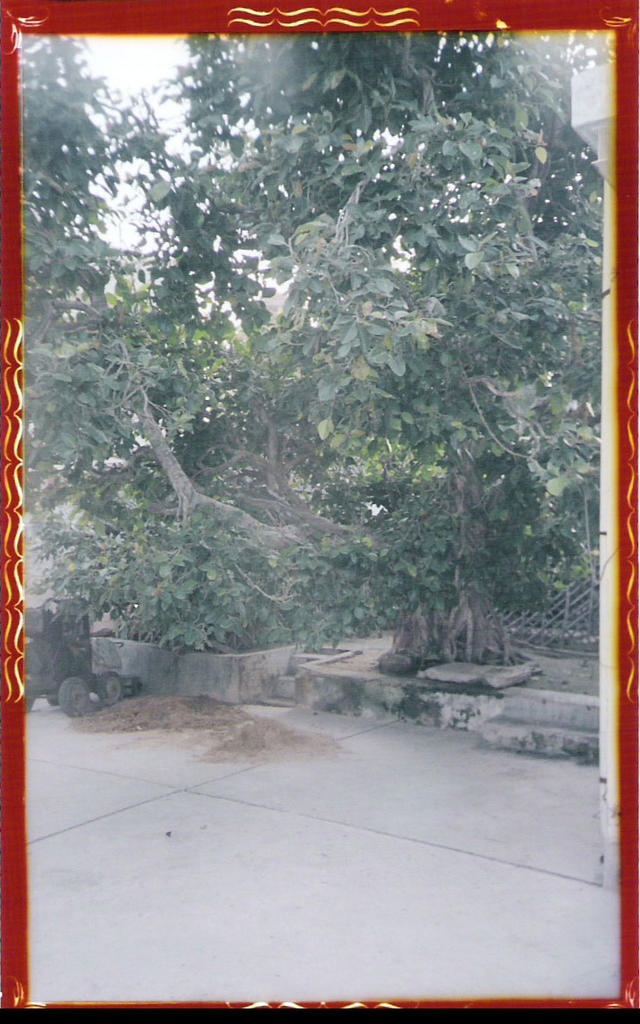
I do some bhajan under the beautiful Advaita Vaṭ (Banyan) tree - (see images above) where Advaita Prabhu resided and worshipped.

Monday, September 26, 2005

Kīrtan at Śṛṅgāra Bat


The kīrtanīyas at Śṛṅgār Bat perform fine kīrtan for my mother's viraha utsava, memorial festival.

Saturday, September 17, 2005

Śrīla Haridās Ṭhākur’s disappearance day


From Advaita Prakāśa –


eka dina haridāser mane cintā hoilo;
ek sthāne bahu din vāsa nahe bhālo
ālāp saṁsarge hoy māyār sambandha
krame saṁsār āsaktite jīv hoy andha
udāsīner dharma tāhe nā hoy rakhan
ataeva jana saṅga tyāg sarvottam


"One day Haridāsa thought to himself: “It is not good to stay in one place for a long time. One gets into small talk and develops false relationships. Then gradually one gets attached to material life or family life and the soul becomes blind. Then the life of a carefree renunciant cannot be maintained. Therefore the best is to live in solitude, outside of society.”

Monday, August 29, 2005

Klaziena Vraja gallery - her finest hours!

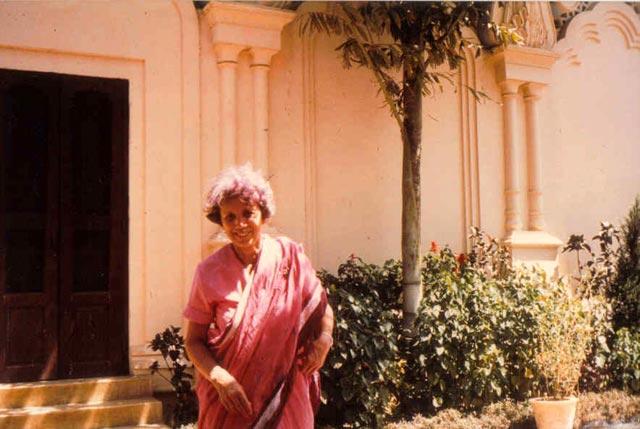
Some photos of my late mother in Vraja -

Vrindavan, Krishna Balaram Mandir, March 1986.
Kusum Sarovar, September 1988
Dhira Samira, Vrindavan September 1988

Sunday, August 28, 2005

A perfect departure.


Klaziena Margaretha Okken

Born Groningen February 4, 1922
Deceased Zoetermeer August 28, 2005

This morning I was mailed by my brother that my mother is terminal and my ex wife would come and pick me up by car to go and see her in her nursing home in Zoetermeer, one hours drive from Zeist. 

When we arrived at 11 a.m. there was a large group of relatives in her room, my own family and the family of my stepfather, about 8-9 people in total. I had always prayed that I could be present when my mother would leave her body, because she was the only member of my family who appreciated my spiritual life. Hours went by and she did not seem to have any intention of leaving her body. A few times my ex and me had her for ourselves, so we could do some chanting in her ear. I was glad to see her mouth was opened wide throughout the dying process, so she was expected to leave her body through her mouth - upwards! My ex was so smart to decorate her 'like a lady', with necklaces including a garland of Tulsī-beads. When my stepfather asked her what beads those were I gave her a bump as a hint not to tell him, so she gave an evasive answer. So far so good. The best was yet to come, because my deepest wish, to chant with her alone while she left her body, was to be fulfilled. After an exhausting 6 hours my relatives and my stepfather and his relatives all went to do different things at different places, and me and my ex were left all alone with her. We were singing hymns like rādhe kṛṣṇa rādhe kṛṣṇa kṛṣṇa kṛṣṇa rādhe rādhe rādhe śyāma rādhe śyāma śyāma śyāma rādhe rādhe, sitting on either side of her. After a while the nurse came in and I decided to take a leak because it was now anyway impossible to keep chanting. When I came back my mother had deceased, but the nurse and my ex both told me that she deceased already when I was still there - all my desires fulfilled!As I realised what had happened, a mixture of feelings rushed through me - joy and sorrow at once, tears and laughter. Joy for being able to chant rādhā-kṛṣṇa nāma in my mother's ears and sorrow for losing her. I could imagine how Mahāprabhu felt when He experienced bhāva śābalya, a mixture of simultaneous contradicting feelings! 

After this my mother was bathed and dressed in clothes of my choice - a purple blouse and a black flower dress. She lay in state in such a majestic way, it was indescribable. A real lady. I feel deeply honoured and deeply loved that she chose to leave her body in my presence, with no one else around. I need to explain that my mother was not an ordinary person - though not a fulltime Vaiṣṇava, she was a member of the Theosophical society and had deep interest in spirituality, religion, art, history, politics and literature. She came to Vraja bhūmi twice, in 1986 and 1988 and each time she stayed for three weeks. She took a bath in Rādhākund and spontaneously bowed down before Śrīla Raghunāth Dās Gosvāmī's samādhi, without us telling her to do so. She never forgot the Vraja-experience either.

Saturday, August 27, 2005

Nandotsava meditation


kalyānānāṁ nidhānaṁ kali-mala-mathanaṁ pāvanaṁ pāvanānāṁ
pātheyam yan mumukṣoḥ sapadi para-pada-prāptaye procyamānam
viśrāma-sthānam ekaṁ kavi-vara-vacasāṁ jīvanaṁ saj-janānām
bījaṁ dharma-drumasya prabhavatu bhavatam bhūtaye kṛṣṇa-nāma


"May Śrī Kṛṣṇa's blessed name, which is a reservoir of all joy and auspiciousness, the destruction of Kali-yuga's sins, the most purifying of all purifying things, the saint's food as he traverses the path to the spiritual sky, the pleasure-garden where the voices of the greatest saints, philosophers, and poets play, the life of the righteous, and the seed of the tree of religion, bring divine auspiciousness to you all."

Quoted by Śrī Rūpa Gosvāmī in Padyāvalī, verse 19

Friday, August 19, 2005

Śrī Rādhikā travels to Barsāṇā - Śrāvan Pūrṇimā


TODAY IS JHULAN PŪRṆIMĀ. ŚRĪ RĀDHIKĀ TRAVELS TO BARṢĀNĀ

AS IN VILĀPA KUSUMĀÑJALI, VERSE 88:

BHRĀTRĀ GO'YUTAM ATRA MAÑJU-VADANE SNEHENA DATTVĀLAYAM
ŚRĪDĀMNĀ KṚPAṆĀṀ PRATOṢYA JAṬILĀṀ RAKṢĀKHYA RĀKĀ-KṢAṆE
NĪTĀYĀḤ SUKHA ŚOKA RODANA BHARAIS TE SAṀDRAVANTYĀḤ PARAM
VĀTSALYĀJ JANAKAU VIDHĀSYATA ITAḤ KIṀ LĀLANAṀ ME'GRATAḤ

bhrātrā - by Your brother; go - cows; ayutam - ten thousand; atra - there; mañju - beautiful; vadane - face (fem.); snehena - with affection; dattvā - having given; ālayam - the abode; śrīdāmnā - by Śrīdāma; kṛpaṇām - to the miser; pratoṣya - for satisfying; jaṭilāṁ - to Jaṭilā; rakṣa ākhya - known as Rakṣa; rākā - full moon; kṣaṇe - moment; nītāyāḥ - taken; sukha - happiness; śoka - sorrow; rodana - crying; bharaiḥ - with abundance; te - Your; saṁdravantyāḥ - melting; param - greatest; vātsalyāt - out of love; janakau - parents; vidhāsyata - will do; itaḥ - here; kiṁ - whether; lālanaṁ - fondling; me - of me; agrataḥ - before.


O Mañju-vadane (fair-faced girl)! On the full moon day of Śrāvaṇa (August) named Rakṣa Pūrṇima Your brother Śrīdāma comes to Yāvata with ten thousand cows to satisfy the greedy Jaṭilā before affectionately taking You along to Varṣānā, where Your parents lovingly fondle You in front of me as You melt with weeping from happiness and sorrow.


(Note by editor: Rakṣa Pūrṇimā is an auspicious family festival in India, during which brothers and sisters swear protection to each other by binding a decorating string around each other’s wrists)

Commentary by Śrīla Ānanda Gopāl Gosvāmī: Śrīdāma-Candra is called bhagini vatsala, he who is very fond of his sister. One day before this auspicious event Śrīdāma goes to Yāvata, the abode of Śrī Rādhikā's mother-in-law Jaṭilā. Eager to satisfy Jaṭilā, who is very miserly, and does not want to let his sister go, Śrīdāma asks her: "What do you want as a gift?" Jaṭilā is very greedy and demands cows, so he gives her ten-thousand cows just to appease her. In this way he can take his sister along. All this is arranged to facilitate Rādhā and Kṛṣṇa’s pastimes - in Śrī Rādhikā's parental home there is less control over Her than in Yāvaṭa. There it is easier for Śrī Rādhikā to go out to meet Kṛṣṇa. Rādhikā’s father and mother are staring down the pathway for their daughter to come. When Svāminī arrives mother and father bless Her so affectionately! Svāminī cries of happiness and sorrow. Happiness because of coming back home and sorrow because of Her long stay at Her in-laws' abode. Svāminī melts at the bosom of Her mother Kīrtidā, as if She merges with her and weeps, saying with choked voice: "Just forget about Me, ma!" Kīrtidā-Mā sobs: "Can I ever forget You?" Mother Kīrtidā’s chest is inundated with tears. Svāminī is vraja go gopa gopālī jīva mātraika jīvanam: (Śrīla Raghunātha dāsa Gosvāmī's '108 names of Rādhikā) the very life of the cows, cowherders, cowherdwomen - nay, of all creatures of Vraja! How much then isn't She the life of the life of Her mother, who is the very form of parental love?! Tulasī prays: “It is my strong desire to see Your father and mother give You so much affection and love.” How close are the maidservants to Svāminī!  Unless She accepts you this cannot be understood.

Wednesday, August 17, 2005

Śrīla Rūpa Gosvāmīpāda's viraha tithi

Disappearance day of Śrīla Rūpa Gosvāmīpāda

śrī caitanya mano'bhīṣṭam sthāpitaṁ yena bhū-tale
so'yam rūpa kadā mahyam dadāti sva padāntikam

"When will that Rūpa, who came to establish Śrī Caitanya's heart's desire on the earth,
grant me a place at his lotus feet?"

(Prema Bhakti Candrikā, Narottam Thakur, verse 2)

Jhulan Time


Jhulan means Rādhā and Kṛṣṇa are enjoying on the swing. The Vrajavāsīs celebrate it on the 12 days preceding the full moon in Śrāvan (August), the Bengalis from Ekādaśī to Pūrṇimā - 5 days, this year 4 days from August 16 to August 19.

The above picture shows this year's Jhulan at Rādhākuṇḍ, in the Rādhābinod Mandir of Prānkṛṣṇa Dās Bābājī...

Tuesday, August 16, 2005

Sādhu Bābā


Sādhu Bābā
comes over to blogspot.com!