Saturday, April 29, 2006

Updates of madangopal.com

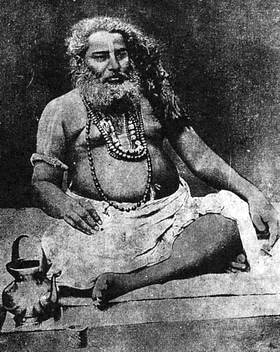
On pages 18-19 of the biography of Sādhu Bābā a new paragraph is created, all about japa. In it are known teachings of Sādhu Bābā to which I added this famous one:

"One should not trade on the market with a bead-bag in the hand and one should not go on parikramā (when one visits a holy place) with one’s beads, because each time one sees a saint or a temple one has to bow down and touch one’s beads to the ground, and that is a great offence to the sacred chanting beads."

And this golden memory of Sādhu Bābā, also on page 18:

Krishnā Dās: "Bābā never bestowed the title Mahārāja, Bābājī or Mātājī to any of his disciples."

On page 2 an index has been added to facilitate browsing in this file too.

More golden sayings of Niranjan Prasād Dās added to his file 'Satsanga with Niranjan Prasād Dās' (link-tab 'Opinions'), page 2:

“To remember the Guru – that is human life. I have not seen Bhagavān – how will I remember Him? I have never seen Him, but I have got (seen) my Gurudeva.”

page 3: “(Considering how central Advaita Prabhu was to Bābā) See how much he loved you by giving you the name ‘Advaita’!”

This, and much more, at www.madangopal.com!

Saturday, April 22, 2006

Explanation of 'Ignorance IS an excuse"

I have received the following reaction to my last blog and I am posting the essence of it here in case it is not properly understood:

“I can't seem to work out the implications of Vijay Krishna Goswami's thoughts. I can understand that varnashram would be difficult to practice in the western world in its strictest meaning. We can also do away with samskaras or ritualistics rites that are a part of the Hindu tradition....And while in the west for myself, I will wear the clothing preferences of the women in the west, which I consider decent. On the other hand, I am sure you are not advocating for Vaishnavas living in the western country to take to meat eating again nor to practice the permissive stance of many people in the west in regard to personal relationship. Therefore can you please explain a bit more of your thoughts about the quote of Vijay Krishna. I am thinking of the absolutes and relatives lines within this particular quote.”


My response:
“Hmm there is a misunderstanding here. I was not trying to make the point that WE Western Vaiṣṇavas should be assimilating with western culture (I myself live a combination of Indian and western lifestyles, wearing Indian clothes at home and western clothes outside). When in the opening text I spoke of westerners, I meant non-devotee westerners, and the point of the blog was that Western Vaiṣṇavas are trained to think that all 'karmis' they meet on the street while on 'sankirtan' are going to go to hell because they eat meat, drink alcohol, cohabit without marriage etc. (At least we were trained like that in the 1970s, I don’t know about nowadays) The point that Sādhu Bābā and his predecessor Vijay Kṛṣṇa Gosvāmī make is that people are judged by God according to their own level of realization, their own culture and their own religious principles. Note that Vijay Kṛṣṇa Gosvāmī said that they are not sinning unless and until they realized that it is wrong what they are doing.

“Whatever is thus considered decent is accepted, and unless and until it is understood and realized to be wrong and unjust it should certainly be followed.”

And we western Vaiṣṇava-converts are certainly aware of the wrongs of alcohol and meat-consumption. Ignorance is an excuse but western converts are no longer in ignorance….

Wednesday, April 19, 2006

Ignorance IS an excuse


Although most western devotees have been initially taught that all westerners go to hell because they don’t follow the Vedic principles and that ‘ignorance is no excuse’, when I told this to Sādhu Bābā he laughed and thought I had told him the joke of the year. Later, when studying the teachings of Vijay Kṛṣṇa Gosvāmī, I understood why –

“Although not every human being has the same duties, obligations and ethics, there is morality according to country, society and time. Whatever is thus considered decent is accepted, and unless and until it is understood and realised to be wrong and unjust it should certainly be followed. Whatever I believe to be my duties and propriety that is my religious principle. If one doesn’t follow one’s fundamental religious principles one meets with woe and commits sin according to one’s local, social and temporal customs and ethics. Whatever obligation and ethics one believes in and accepts with a simple heart, that is one’s religious virtue and should certainly be followed. In some places the eating of fish and meat is established custom and at other places it is rejected as a sin as if it is poison.” Vijay Krishna Goswami, June 1891.

Friday, April 14, 2006

ebe yaśa ghuṣuk tribhuvana

In my archives I found some more nectarean examples of my beloved and revered Guru-brother Śrī Nirañjan Prasād Dās’ Guru bhakti. On a tape I recorded of him in March 2000 he said:

“I was not a young man when I met the sat-Guru – When I was 60 years old I had this amazing vision – I saw the Guru - Guru, Guru. Whatever I had heard before that was at once erased. I erased everything. He pulled me to his lap – behold the vision of the Guru!”

When I wrote Nirañjan Bābu about my misgivings about preaching Bābā’s glories, quoting a warning by Kavi Karṇapura in this regard, Nirañjan Bābu wrote back (November 12, 2002):

“I became ecstatic by learning that you will preach Baba’s glories and are already engaged thus. Why do you consider scriptural statements such as guror nama na grhniyat (“One should not utter the Guru’s name”)? There will be no fault in this, because you are not doing this for spreading your own fame – this is for the benefit of all living beings, for the whole world. Indeed, you will benefit yourself to the utmost too by preaching the glories of a saint!”

This brings back the memory of how Narottam Dāsa Thākur Mahāśay closed off his famous exaltation of the Guru: ebe yaśa ghuṣuk tribhuvana – “Now let all the three worlds proclaim your fame!” (If the macrocosm of the larger world wont then let at least the microcosm of my own mind and heart do so!)

The anecdotes have been added to the file "Satsanga with Niranjan Prasād Dās", under the link-tab 'Opinions' on www.madangopal.com

Sunday, April 02, 2006

Bengalizing

I just found this post by Chanahari in Gaudiya-repercussions (Academic, controversial, eclectic) of one year ago. Never noticed this one until now: Apr 15 2005, 12:26 PM Post #2

"Advaitadas is the Westerner who reached maybe the most far away point both in effort and in faith in Bengalizing himself. I always wondered how can one so much immerge himself in a culture he is not native in (setting aside the topic whether it is needed or not in reaching Radha-Krishna...). If he is right, of course, then only Bengali and quasi-Bengali* Vaishnavas would reach the highest goal of GV, so there is no point in practicing Vaishnavism in the West at all - most of us can simply give up with any effort and fall back to the samsara, and just wait a few million lifetimes until by happenstance get a Bengali birth (maybe firstly as a monkey or a cow, and then as a woman, and then as a man ).
.....*Quasi-Bengali is, subjectively, one who lives with the Bengali cultural customs, eats the Bengali foods, wears the Bengali clothes, reads the Bengali literature (besides technical instructons), in full or nearly full exclusion of the Western correspondants, despite being not born in a Bengali family. "


This is very funny. (One wonders, of course, how much Chanahari actually knows about Bengali culture because you won't find much of it in Iskcon, not even in Māyāpur, and only a few western devotees have gone beyond such realms into the real Bengal). So let us analyse this 'Bengalizing' : Bengali cultural customs? If sadācāra or ritual purity is referred to, this is from the Vedic smṛti-scripture, and is not culturally Bengali. If fast and late eating is referred to (this is typically Bengali culture), no I don't indulge in that because I don't want to have an ulcer (last time I ate late with Bengalis was one month ago at Rādhākuṇḍa and I had the runs for two days, causing me to shift to a Brajabāsī place). Bengali cuisine is certainly the most delicious in the world, especially if prepared and offered by a Bengali brahmin! I wouldn't scrap it for a fortune!!! Bengali clothes? What is Bengali about a dhoti and a t-shirt? A dhoti is pan-Hindu/vedic and a t-shirt can be bought anywhere in the world. Bengali literature? OK, Caitanya Caritāmṛta and Advaita Prakāśa are favorites of mine, the others are all written in Sanskrit, not Bengali. Yes, I am fluent in Bengali but I only speak it when I am in the company of Bengalis and even then not always. I mostly speak English and Dutch actually.....

On the positive side, virtually all Gauḍīya Vaiṣṇava ācāryas, modern or ancient (that have not fallen down) are Bengalis, Mahāprabhu and nearly all His associates appeared in Bengal, would that be coincidental? Indeed, the word Gauḍīya itself means Bengali.

I myself, however, loathe the Bengali chauvinism about being born or having to be born not only in Bengal but even in certain districts of Bengal. No one has uttered more sarcasm about this tribalism than yours truly, but I leave the last word to Śrī-Śrī Sādhu Bābā (yes, a Bengali brahmin!). When I asked him, in 1984, if a westerner could attain Rādhā-Kṛṣṇa in this lifetime he enthusiastically roared 'ek śo bār!' (Bengali for 'you bet!'). I do insist it is a safe bet to take dīkṣā from a Bengali rather than an American Guru. History has vindicated me on this point. Personally I find it even astonishing that a person can still take dīkṣā from a westerner after all his predecessors have fallen down. It is like not believing you will one day die despite seeing all older people die before you. That the Guru's birth matters is of course elaborately insisted upon by Śrīla Sanātan Gosvami and Śrīla Gopāl Bhaṭṭa Gosvāmī in the opening chapter of Śrī-Śrī Hari-bhakti Vilāsa..............

Saturday, March 25, 2006

Lokanātha's Guru


March 22, 2006
Sītānāth's Dol-Saptamī. I shoot a pic of Giridhārī on the wooden Brajabāsī-swing in 'my' gośālā at Rādhākuṇḍa.

Lokanātha Goswāmī's Guru
Vilasakunja.com, March 18, 2006:
Q: This view seems to me to be quite problematic. Why should he (Lokanath) not accept a diksa-guru? And how could he then give diksa to Narottama?
Madhavananda Das: "He may have felt it was not relevant, given his relationship with Mahaprabhu since his very childhood, and the infusion of all divine essence this relationship effected."


This is a bizarre theory for someone who, on Gaudiya Discussions, vehemently preached the need for everyone to take dīkṣā in the proper line. This is an echo of the theory of Bhaktisiddhānta Saraswati's followers. Mahāprabhu, Lord Rāma, Lord Kṛṣṇa- everyone gave the proper example by taking dīkṣā, and then Lokanāth Goswāmi did not need it? Advaita Prakāśa (12.97-100) clearly states that he did. Why Lokanātha Goswāmi's Guru is not mentioned in the different Guru-praṇālīs is a wonder to me too, since there are scriptural claims on him by both the Adwaita Parivāra and the Gadādhar Parivāra.

Wednesday, March 15, 2006

Holi/Gaur pūrnimā 2006


(Tulasis in Yadunath's garden)


March 14, 2006
2006 Colour Holi/Gaurpurnima
It's cloudy and windy, so no weather to be soaked by Holi-liquids. So I stay inside and give Giridhārī His abhiṣekh with just raw milk. In the evening there's such a rainstorm that I doubt if I will make it to Rohini's house, but I do reach it.

Rohini supports Jai-kṛṣṇa Dās Bābā's suggestion that a manjari's cloud-coloured dress can be white too, like an autumn cloud. It's not like a widow's dress, because it can have embroidery and ornaments. An apt discussion on a full-moon night, when Rādhikā goes out dressed all in white.

March 15, 2006
Stool-Holi begins early, at 7.45 a.m., when Brijabasis, with bags of powder, begin coloring each other. Rohini's place isn't much safer than the gośālā though - at 11 a.m. scary bands of Brijabasis with black hands (stool or paint?) are roaming around the house. When I cook for Rohini I warn him against my bad cooking. He wisely replies that (Mahāprabhu told Raghunāth Dās Goswāmī) we shouldn't eat nicely. I'll remember that next time I have guests! I suppose that if I didn't bother too much about nice dressing (the other prohibition of Mahāprabhu) I wouldn't be so terrified of stool-Holi anymore!

Sridhara Swami says that forgetting God in the famous 'bhayam dvitīyābhiniveśatah'-verse (11.2.37): bhagavataḥ svarūpāsphūrtis tato viparyayo dehāsmīti means "Not having a vision of God's own form. Hence one thinks: I am the body."

An alternative reading says: īśa vimukhasya tan māyayā'smṛtiḥ svarūpāsphūrtiḥ, 'Forgetfulness of God means that one does not perceive ones own svarūpa..." Nothing about falling from Goloka here....

About the famous 'ye'nye'ravindākṣa' verse (10.2.32) he says tvayi asto nirasto'ta evāsan yo bhāvas tasmāt bhakter abhāvād.... "Having no devotion to You" kṛcchrena bahu janma tapasā paraṁ padaṁ mokṣa sannihitaṁ sat-kula tapaḥ śrutādi."After many births of penance he attains the supreme abode, nearness to liberation, birth in a good family, learning..." 'sannihita' means "close, near, at hand, proximate, prepared to, ready or", so he's not really merged in brahman yet. This shows that no jīva falls down from Brahman, this verse having been the only option that would allow such a theory.

Monday, February 27, 2006

Śiva Caturdaśī, prāṇa pratiṣṭha, respect and Sevā Kuñja

Due to difference of opinion most people did Śiva Pūjā and the vigil yesterday, so today it really peaceful at Gopeśvara Mahādeva Mandir. At the gate I buy a basket with a garland, roses, Bael-leaves, incense and some other items to offer. I am out within 5 minutes.

In a private darśan I ask Satya-nārāyan Dāsjī whether Kṛṣṇa will not be there in the deity because of corrupt management of its temple or organization, due to lack of prāṇa pratiṣṭha or lack of bhakti. He says prāṇa-pratiṣṭhā is just a show conducted for social acceptance of a temple. Kṛṣṇa is anyway everywhere, so why not in a non-installed deity? Kṛṣṇa is manifest in the deity according to the bhakti of the individual who comes for His darshan.

I ask him about the dilemma of having to respect older devotees who may be deeply flawed. He says it is hazardous to criticise elders in public (internet) for one will make many enemies, but in private one should certainly speak the truth about such a senior devotee, because it is one's duty to warn innocent would-be followers against him. About Upadeśāmṛta verse 6 he says that one should not dishonor a devotee because of faulty character but also not associate with him/her, just as one would die after drinking the Yamunā-water in its current polluted state, but must certainly respect her from a distance.

During the class he confirms that one cannot just get darśan of Rādhā-Kṛṣṇa by hiding oneself in Sevā-kunja. This is a myth, hearsay. All the neighbors can look in from the first floor and they don't go blind or mad. I tell him I was living in such a first-floor adjacent room and I never saw anything (and mad I was already before that anyway!)

Saturday, February 25, 2006

Women and social life

My Dutch friend Vāsu Ghoṣa tells me that women cannot live without social life. Men can. I remember the līlā of the sacrifice of Dakṣa. Satī was so eager to go there and socialize that she defied the prohibition of her husband Śiva and went there anyway. It cost her her life and that of her father.... (I do know there are some women who are less socially inclined but they are exceptions)

Wednesday, February 22, 2006

satsanga with Satya-nārāyan Dās

Today, during his Bhāgavata-pāṭha, Satya Nārāyan Bābā discussed Viśvanātha Cakravartī's ṭīkā on Śrimad-Bhāgavata 1.9.26, where he says: kintu vairāgyaṁ cet sadaiva bhikṣavo bhaveyus tadā rāgas ced gṛhastha eva sadeti "A vairāgi should be vairāgī throughout life and a gṛhastha should be a gṛhastha throughout life if that is their true propensity." If vairāgya isn't there at age 50 one has either not properly followed gṛhastha dharma or one is simply not inclined towards vairāgya."

When I ask Satyanārāyan Bābā about the Haribhakti-vilāsa verse amārgastho sanmārgo vā gurur eva janārdanaḥ ("Whether on the path or off it, the Guru is always God"), he says that if the Guru is not on the path he cannot bestow siddhi, just as blind faith in a counterfeit medicine will not cure your disease. He reminds me of the verse I quoted earlier -

guror apy avaliptasya kāryākāryam ajānataḥ
utpatha pratipannasya parityāgo vidhīyate

"If the Guru is arrogant, does not know right from wrong and is devious he is to be fully rejected".

I ask him about the muktānām api siddhānām verse (Śrimad-Bhāgavata 6.14.5), if that means that those who merged into brahman can really proceed to bhakti. He says muktānām refers to jīvanmuktas (those liberated in this body), not to atyantika muktas, fully liberated souls. Kṛṣṇa may take a soul out of brahman, because individuality is eternal, even in brahma-līna. A drop of water remains a drop, also when it is part of an ocean.

Edited December 16, 2008

Saturday, February 04, 2006

The advent of Śrī Advaita Ācārya


As Lord Sadāśiva, the transcendental deity from Vaikuṇṭha who is the fountainhead of all the forms of Śiva within the innumerable mundane universes saw the wicked age of Kali, or quarrel, destroying all godly qualities in man, He became filled with compassion. After many deliberations with goddess Yogamāyā He sat down on the shore of the Causal Ocean, where Lord Mahaviṣṇu lies in mystic slumber. That great, ever-joyful yogi sat down on a yoga-āsana and began to practice yoga there. After 700 years of penance the Universal Lord Mahāviṣṇu appeared to Him. Five-headed Śiva then offered many kinds of indescribable praises to Mahāviṣṇu, who replied: "My dear Sadāśiva! Why are You trying to please Me by performing such difficult austerities? You and I are one! We differ only in body!" Sadāśiva replied: "My dear Lord, unless You empower Me to save suffering mankind, how can I do it?" Then Mahāviṣṇu embraced Sadāśiva and thus They assumed one captivating, radiant golden form in which They would appear, roaring out 'kṛṣṇa! kṛṣṇa!'
Then a most amazing divine voice resounded in the sky, proclaiming: "Listen, O Mahāviṣṇu! First descend in the womb of Lābhā-devī in this form— later I will personally descend in Nadiya. You will then find Me in the abode of Śacī and Jagannātha. Balarāma and all the other devotees will also all take birth there to redeem the conditioned souls." Hearing this, Mahāviṣṇu became one with Siva and together they entered the womb of Lābhā-devī in Śāntipura.

Friday, February 03, 2006

2006 Sītānāth Utsava


Kṛṣṇā Di


Kīrtan in the pandal


Golok and Rākhā Dā


Thanks to Prāngovinda for the hottest photos of Sītānāth's Utsava - the annual festival to commemmorate Advaita Prabhu's birthday in Sādhu Bābā's āśram, Prāchīn Māyāpur, Navadvīp! Glory to digital photography! Sītānātha's Utsav comes (almost) live into your living-room!

Sādhu Bābā on Vedic Utopia

Returning to the discussion of meat-eating and other practices in the Vedic civilization, I have this entry in my Indian diary, early November, 1984 – "Shortly after the assassination of Indira Gandhi I ask Bābā how it is possible that such a person can rule a holy land like India for so long." Bābā pointedly replied: āge-o kaṁsa-ṭaṁsa chilo to? “In the ancient days there were demoniac rulers like Kaṁsa too, weren’t there?” This is significant in relation to the utopian ideas that many, especially western, devotees, have of the ancient Vedic civilization. Its principles were perfect, but human beings are not and never were.

This anecdote is added to the biography of Sādhu Bābā (linktab Nikunja Gopal Gosvami, page 43) at www.madangopal.com

Tuesday, January 31, 2006

On siddha praṇālī

On siddha pranali, Muralidhara das states today in Audarya-fellowship:

In fact there is a situation where, generation after generation, the successive gurus in various "traditional communities" of Gaudiya Vaishnavas are giving instruction about "siddha-deha" to new initiates, with the gurus telling the disciples about their own "siddha name" and "siddha form", as well as the disciple's form and name: "you are such-and-such manjari"; but in reality these so-called gurus have no real vision of either their own real spiritual form or the spiritual body of their so-called disciples. The so-called gurus haven't realized their own real "siddha form". Nor have they attained the realized the stage of Prema (pure love). But they are initiating new disciples and telling the disciple "you are a manjari and your name is such-and-such-manjari". The practices of these people are in fact a mere imitation of the practices of Gopal Guru Goswami, Dhyanacandra Goswami and other devotees of the past who had a real and direct understanding of the transcendental form of their innermost self (swarup siddha).

This is objectionable. How does Muralidhara das know whether or not these 'so-called' Gurus are self-realized and have prema or not? It is insinuating, which is dangerous in relation to Vaiṣṇavas. There lies the chance of Vaiṣṇava aparādha. Let Muralidhara come forward and tell us which 'so-called Guru' is not realized and has no prema, yet gives siddha pranali.

"In his commentary (on Bhakti Rasamrita 1.2.291), Srila Vishvanatha Cakravarti Prabhu points out that in this verse Sri Rupa Gosvami has clearly defined raganuga bhakti. Here, Sri Rupa Goswami states that those individuals who in their intrinsic nature feel an intense longing and firm attachment for service following in the wake of the feelings and sentiments of the residents of Vrindaban, with no thought or attraction for the majesties of the Godhead, are alone eligible for following in the way of raganuga bhakti. The person eligible for raganuga bhakti may spontaneously follow Sri Radha and other Gopis in madhura rati, Nanda-Yasoda and others in vatsalya rati, Sridama-Sudama and others in sakhya rati, or Citraka-Patraka and others in dasya rati."

Factually, however, Viśvanātha Cakravartī says nothing of the kind. He says:

prasaṅgato rāgātmikāyā lakṣaṇam uktvā prastutayā rāgānugāyā lakṣaṇam āha - rāgātmikāyā iti. rāgātmika bhaktau eka-niṣṭhaṁ yeṣāṁ teṣāṁ vrajavāsināṁ śrī kṛṣṇe yo bhāvas tat sājātīya bhāvāptaye lubdha ityarthaḥ.


"In the course of discussing rāgātmikā bhakti, rāgānugā bhakti is also defined, in this verse rāgātmikaika etc. The greed to attain the same feelings towards Śrī Kṛṣṇa that the exclusively fixed rāgātmikā vrajavāsī bhaktas have (is called rāgānugā bhakti)."

The word 'spontaneous' is not there, 'attraction for the majesties' is not there, nor is there any mentioning of Yaśodā, Sudāmā and Patraka etc.

Also, it is not that the siddha deha comes just falling out of the sky, like it's pure divine revelation and no sādhana or preliminary meditation is involved. Śrī Kṛṣṇadās Kavirāja has written in his commentary on Kṛṣṇa Karnāmṛta, verse 3, that in the unripe stage, preceding bhāva, one may meditate on one's own desired siddha deha -

rāgānugā mārge anutpanna-rati sādhaka-bhaktair api svepsita siddha dehaṁ manasi parikalpya bhagavat sevādikam kriyate. jata ratīnam tu svayam eva tad deha sphūrteḥ

"In the ripe stage of bhāva it becomes manifest by itself." This is confirmed by Narottama Dāsa Thākur in his Premabhakti Candrikā:

sādhane bhāvibo yāhā, siddha dehe pābo tāhā

 pakkāpakka mātra sei vicāra 


'What I think of in my sādhana is what I will attain in my siddhi. The only difference is ripeness or rawness." On the other hand again, Śrīla Jīva Gosvāmī says that one does need to be pure-hearted in order to be able to meditate on anything. So the truth lies in the middle. Nor the stern approach of Bhaktisiddhānta nor the 'anything goes'- approach of some bābājīs is balanced.

Muralīdhara then continues:

Baladeva quotes the Chandogya Upanishad, which states:
"Thus does that serene being, arising from this body, appear in its own form, as soon as it has approached the highest light, the knowledge of Self. He, in that state, is the highest person (uttama purusha). He moves about there laughing or eating, playing, and rejoicing in his mind, be it with women, carriages, or relatives, never minding that body into which he was born. - Chandogya Upanishad 8.12.3.
In his Govinda Bhasya commentary Sri Baladev Vidyabhusan then quotes the following verse from the Padma Purana:
anur nityo vyapti-silas cid-anandatmakas tatha
aham artho 'vyayah saksi bhinna-rupah sanatanah
The soul is atomic, eternal, is present by consciousness everywhere in the material body, is by nature full of spiritual bliss and knowledge, has a sense of individual identity, is unchanging, is a witness within the body, and is different from the Supreme.
Srila Baladev Vidyabhusan states that the spiritual form of bliss the liberated being attains is the original form of the soul that lay dormant within when the soul was in illusion. The Vedanta Sutra tells us that the spiritual body of the liberated being is the soul's original form. This form is a form of eternity, knowledge and bliss, as is mentioned in the verse above (cid-ananda-atma). It is not that the soul attains liberation and enters into a spiritual body or a form of existence which is an external imposition, an external state of being different from the self itsef. Not at all. The liberated soul realizes the spiritual nature of one's own inner being."


This, however, does not contradict the 'superimposition of a siddha svarūpa'. The above quotes of Narottama and Kṛṣṇadās Kavirāja make it clear that one does meditate on details of the siddha svarūpa in an unripe state. The quotes from Baladeva and the Upaniṣads simply state that the soul is unchangeable, intrinsically spiritual etc, and there is neither acceptance or rejection of meditating on the details of one's siddha-svarūpa in these quotes.

By saying It is not that the soul attains liberation and enters into a spiritual body or a form of existence which is an external imposition, an external state of being different from the self itsef. Not at all. The liberated soul realizes the spiritual nature of one's own inner being." Muralidhara contradicts himself, as in the beginning of his essay he did acknowledge the validity of the siddha praṇālī-process given by "Gopal Guru Goswami, Dhyanacandra Goswami and other devotees of the past who had a real and direct understanding of the transcendental form of their innermost self (swarup siddha)."

Saturday, January 28, 2006

Hindus, Vaiṣṇavas and the eating of meat.

While reading a thread on gaudiyarepercussions.com about meat-eating in the Vedic civilization I am wondering if the participants have ever been to India or they have any experience of Vedic life outside of Iskcon at all. No Vaiṣṇava ācārya has ever claimed that the Vedic civilization on the whole is one of pure vegetarianism, nor are Vedic- and Vaiṣṇava culture totally identical or even compatible. One who has lived in India will surely know that most Hindus are not vegetarians, though they will abstain from beef. Scriptures like Harivaṁśa and books about Rāmacandra (haven't seen that myself though, so I can't confirm or deny it) and Brahma Vaivarta Purāṇa (that I did read) may have described Rāma or the Brajabāsīs eating meat. One must understand here that, at least the Brahma Vaivarta Purāṇa (which I can judge) is a Purāṇa in the mode of passion (rajo-guna) and that colors its subjective depiction of Kṛṣṇa līlā as well.

However, the books quoted in that thread are not quoted in the Gosvāmīs' books. nānā śāstra vicāranaika nipuṇau saddharma saṁsthāpakau (Śrīnivāsācārya's Ṣaḍ gosvāmyaṣṭakam - 2) "The Gosvāmīs were expert in scrutinizing various (not all) scriptures to establish the sad-dharma, the true religion." The outcome of their studies is that meat, fish and eggs are not served during Vaiṣṇava feasts, not in Iskcon, but also not in the Gaudiya Maṭha, with the bābājīs, Gosvāmīs or anywhere. It is also mentioned in Bhagavad Gītā (9.26) and the Bhagavat (1.17.38. śūnaḥ prāṇī-vadhah...adharma - 'killing other living beings is adharma', Viśvanātha ṭīkā) that a Vaiṣṇava is to be a vegetarian. Nobody has ever claimed that Vedic civilization itself is or has ever been vegetarian.

Thursday, January 26, 2006

Mahāprabhu about respect in general

From Caitanya Caritāmṛta (Antya 4. 135-169) we learn that junior devotees should not instruct senior devotees. In this narration we see that Jagadānanda Paṇḍit advised Sanātana Gosvāmī to go to Vṛndāvana, but when Mahāprabhu heard that he was very angry, because Jagadānanda Paṇḍita was junior to Sanātana Goswāmī not just vyavahāre, materially, by being younger in age, but also paramārthe, spiritually, because Sanātana Gosvami was like his Guru (CC Antya 4.159 vyavahāre paramārthe tumi - tāra guru tulya). Mahāprabhu thus set the standard for devotees of all time to act according to maryādā, or protocol. He will be very angry when junior devotees instruct senior ones - maryādā laṅghana āmi sohite nā pāri (C.C. Antya 4.166) "I cannot tolerate breach of the protocol."

One should note, however, that if a devotee senior in age is inferior in spiritual advancement one need not heed the instructions of such a senior devotee-by-age-only. After all, Mahaprabhu said of Sanātana Gosvāmī: kāhā tumi - prāmāṇika, śāstre pravīṇa; kāhā jagā - kālikāra batuyā navīna (CC Antya 4.167) "Where are you, expert in the scriptures and a great authority, and where is Jagadānanda in comparison, a new student?" Sanātana Gosvāmī was not just superior in age.…….

This paragraph is added to the end of my essay 'Who or what is a brahmin or a Guru?' on the 'Articles'- page of www.madangopal.com

More cautions by Śrīla Jīva Gosvāmī

Śrīla Jīva Gosvāmī said in Gopāl Campū (1.23.1) that the Rāsa-līlā is for private discussion, not public hearing: tad etad govinda vraja vijana kāntānuvacanam dadhadbhir yogyasya śravasi param arpyam na sadasi - 'This confidential Rāsa-līlā topic is to be heard by qualified people who carry Govinda in their hearts, not in a public assembly."

This cautionary note is added to the footnote on page 6 of my essay "Qualification for Raganuga Bhakti" under the linktab 'Articles' of www.madangopal.com.

Friday, January 13, 2006

Regrets

I remember that, in 1988, when the late Rohiṇīndranāth Mitra of Keśī-ghāṭ found out that I had translated Govinda Līlāmṛta into English, he told me: "Very well done. And now you please put this book away." Then he went on reminding me how Bhaktisiddhānta Sarasvati did not want his followers to read Ujjvala Nīlamaṇi and the like. I remember in 1983 Sādhu Bābā told me not to read rasika books if/when I was in a non-celibate state (he also told me not to go out of our āśram as Navadvīp is full of sahajīyas). Nevertheless I continued to read, translate and distribute rasika kathā. Now self-confessed sahajīyas like Pītāmbar Dās and Jagadānanda Dās are reading and passing out these books to wholly unqualified people. I feel some burden of responsibility here; I was too liberal in the past. Now what to do? When you fired the gun you cannot call back the bullet anymore!

Of course many people also express gratitude at my translation work and some people will benefit from it, but the harmful side-effect of that past 'mission' of mine is that people who do not realise the spiritual nature of Rādhā and Madangopāl's loving pastimes are reading them and are - deliberately or otherwise - misrepresenting them. I deeply regret that....

Tuesday, January 10, 2006

Orthodox

Trying to place the modern western term 'orthodox' into Vedic/Indian/Vaiṣṇava perspective has proven interesting and flattering indeed. The English-Bengali dictionary translates it into naiṣṭika, which is also a Sanskrit word. bhaktir bhavati naiṣṭhikī (S.B. 1.2.18) naiṣṭhikī niṣṭhā cittaikāgryaṁ tāṁ prāptā - "naiṣṭhikī means attaining niṣṭhā or a fixed mind." (Viśvanātha Cakravartī's ṭīkā) The V.S. Apte Sanskrit dictionary translates naiṣṭhika back into English as follows - "Final, last, concluding, decided, definitive, conclusive, fixed, firm, constant, highest, perfect, completely familiar with or versed in." Next time folks call me orthodox, I will blush of shyness at the flattery....

Wednesday, January 04, 2006

Advaitācārya, the greatest Guru of madhura rasa

Today, as I browsed through Murāri Gupta's 'Caitanya Carita Mahākāvya', I found a beautiful verse in the introduction (1.20) which ends with this line:

śrī-yuktādvaita-varyaḥ parama-rasa-kalācāraya īśo vireje

(Syntax: śrī-yuktaḥ = resplendent; advaita-varyaḥ = the superexcellent advaita prabhu; parama = the supreme; rasa = relation with God; kalā = the arts; ācārya = teacher; īśaḥ = God; vireje = shines.

"The most glorious Advaita Ācārya is the Supreme Lord and the greatest teacher of the supreme rasa  (the divine amorous flavour in relation to Śrī Kṛṣṇa)."

This adds to the existing evidence that Advaita Ācārya is indeed the bestower of madhura rasa, despite claims to the contrary. This line has been added to page 1 of my essay 'In defense of the Advaita Vaṁśa' at the linktab 'Articles' on http://www.madangopal.com/.