Tuesday, November 28, 2006

Sādhana bhakti

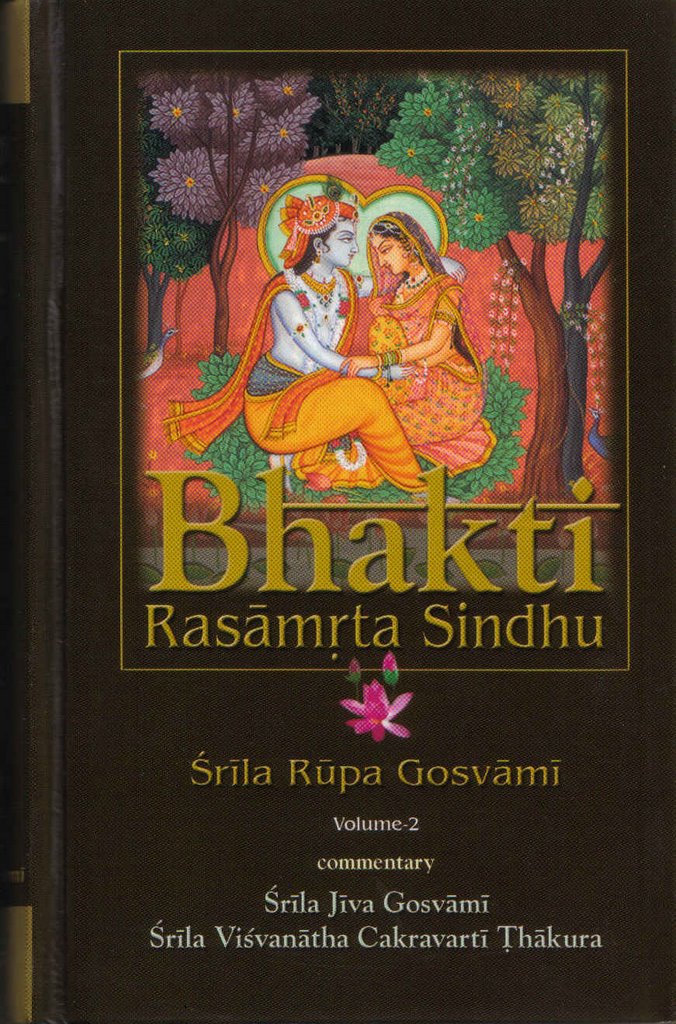
Bhakti Rasāmṛta Sindhu review, installment 2: sādhana bhakti.


In his ṭīkā of verse 1 of sādhana-bhakti chapter Jīva Gosvāmī quotes the same BRS (2.1.276), which states that sādhakas may have anarthas even while being qualified to see Kṛṣṇa directly. This is however, according to Visvanātha, not just an ordinary sādhaka, otherwise he would not be able to see Kṛṣṇa directly, but a bhāva bhakta who may be considered a sādhaka because he is not yet completely pure. This is a conclusion by Bhānu Swāmi, which seems feasible to me. Viśvanātha thus comes to the conclusion that bhāva bhakti does not fit either in sādhana bhakti nor in the class of sādhya bhakti. Hence there is a need for a threefold division of sādhana, bhāva and prema bhakti, not a twofold division as some have suggested, of just sādhana and sādhya bhakti.

In his ṭīkā to the verse smartavyaṁ satataṁ viṣṇuḥ (BRS 1.2.8, one should always remember Viṣṇu), Viśvanātha comments: satataṁ pratyahaṁ na tu prati-kṣaṇaṁ tasyāsādhyatvena vidher anuṣṭhāna lakṣaṇa prāmānyāpatteḥ "satatam does not mean every second but every day, because such non-stop smaraṇam is not possible for a sādhaka. They would produce loss of faith in the rules of bhakti, because they would be impossible to follow." An important consolation for a sādhaka....

Bhānu Swāmī writes in 1.2.16-17: "There are three types of persons qualified for vaidhi-sādhana-bhakti: the uttama, the madhyama and the kaniṣṭha."  However, none of the ṭīkās of these verses say that this applies only to vaidhi bhakti.

Jīva Gosvāmī writes in the ṭīkā of verse 17 that logic should be understood as logic following the statements of the scripture, because independent logic is condemned in verse BRS 1.1.45, a statement I should have used in the big śāstra-debate with Jagat and friends in Gauḍīya Discussions in June 2004. A faithful madhyama is not a blind fanatic but a person who does believe in scriptures. Even the kaniṣṭha adhikārī has basic scriptural faith.

Bhānu Swāmī's translation of Viśvanātha's 1.2.18 tīkā seems odd: '...the person (kaniṣṭha adhikārī) is not completely unconvinced, otherwise he would not even be considered a devotee...' is a text I cannot find in Viśvanātha's Sanskrit ṭīkā, and also his final sentence: "Later the person regains faith in what the Guru has taught by his own judgement" seems to be different in the Sanskrit text: "anipuṇo balavad vādhe datte sati samādhātum asamartha. tathāpi śraddhāvān gurūpadiṣṭa bhagavat tattvādau manasi dṛḍha niścaya ...." 'The unskilled one is not able to defeat powerful arguments by opponents, but still he has firm mental faith in the bhagavat-tattva taught to him by his Guru from the beginning (ādau)."

In the ṭīkā of 1.2.63 Jīva Gosvāmī makes it clear that it is not a fault not to follow all the 64 aṅgas of bhakti: bhaktyaṅgānāṁ nityānām iti jñeyam "Limbs of devotion here means the eternal (main) ones."

In the tīkā of 1.2.102 Jīva Gosvāmī not only rejects the teachings and authority of Buddha (since he rejects the beginningless paramparā) but also plays down his status to one of āveśāvatāra, an empowered incarnation.

Among the sevāparādhas in BRS 1.2.119, paryaṅka bandhanam, 'clasping the hands on the knees' should be 'squatting' in front of the deities.

In the ṭīkā of 1.2.159 Jīva Gosvāmī writes that the difference between stotra and stava is that stotra is a part of śāstra and stava is self-composed (see Stavāvalī and Stavamālā).

Viśvanātha's ṭīkā to 1.2.174: 'As remaining alive is the cause of a good son receiving his inheritance, so the devotee remaining alive in this world with steadiness on the path of bhakti is the cause of his receiving freedom from saṁsāra and service to the Lord." He then quotes SB 10.87.17 as evidence.

In BRS 1.2.249 Jīva Gosvāmī comments "In vairāgya, one must renounce enjoyment by repeated toleration of suffering. The very nature of these practises is harsh and unpleasant, and thus the heart becomes similarly harsh." (this actually belongs to my blog 'Vairāgya needed?" of November 12), in verse 253 Jīva comes with examples of svargāpavarga mad-dhāma kathañcid yadi vañchanti (in this connection) "My devotee gets heaven, liberation or My abode if he accidentally so desires". Citraketu got svarga (heavenly pleasures), Śukadeva apavarga (liberation) and Prahlāda the Lord's abode. Citraketu is quoted in SB 6.17.3 as reme vidyādhara strībhir gāpayan harim īśvaram "Singing the name of Lord Hari, he enjoyed with angelic women". He balances this out in his comment on the following verse, though, saying: "...if vairāgya is forbidden, the bhakta will be filled with material desires, and that is against śāstra......having a taste for bhakti will destroy the attachment to material objects. Thus, the hardness of heart caused by vairāgya will not take place, and still detachment will take place. At the stage of ruci material attraction will be destroyed for the most part (prāyaḥ)...."

Viśvanātha Cakravartī comments on 1.2.272: "That love-filled thirst, or actions inspired by it, such as stringing garlands for Kṛṣṇa,which generates complete absorption in the object of love, is called rāgātmikā bhakti". There is no fault in this rāga even though it may not conform to expected rules. That comes closest to the statement in 'The Nectar of Devotion" that "in rāgānugā bhakti one does not follow the rules so strictly." Sanskrit: evaṁ sati tṛṣṇārūpa rāgasyānusaraṇāsambhave'pi na kṣatiḥ 'There is no harm or loss if it is not possible to anusaraṇa in this thirst-filled passion." anusaraṇa is, according to Monier-Williams: following , going after; tracking, conformity to, consequence of; custom, habit, usage.

In a footnote to page 304 Bhānu Swāmī claimed that the Vṛṣṇis mentioned in this part of BRS are actually Vrajavāsīs and he seems to be vindicated by Jīva Gosvāmī's comment on BRS 1.2.276-77, wherein is stated that the Pāṇḍavas, despite their intimate friendship with Kṛṣṇa, cannot really be counted as pure rāgānugā role-models 'because that affection is predominated by awareness of the Lord's powers, that sneha should be considered predominantly on the path of vaidhi.".... "If the word sneha is taken to mean general prema, it is impossible to follow such prema since no particular details are given about actions that are unique to such prema. Thus it would not be fitting for rāgānugā sādhana because of the lack of any unique features to support it (upajīvyatva)."

Back to the Vṛṣṇi-controversy, from the comments on verse 1.2.288 of both Jīva and Viśvanātha, it is clear that the Vṛṣṇis mentioned in the Bhāgavata 7.1.31 verse, quoted in BRS 1.2.275 are the ballaba, or Vrajavāsīs and not the Yādavas. Visvanātha ends his tika 288 with: rāga-viśeṣa kāmātmikānām udāharaṇe pradhānatvāt gopya uktās tathaiva rāga viśeṣasya sambandhasyāpy-udāharane pradhānatvād ballabā niveṣanīyāh "The best example of kāmātmikā bhakti is the gopīs of Vraja and of sambandhānuga bhakti the cowherds." The word upalakṣaṇa in the verse is used by Jīva Gosvāmī in relation to the word Vṛṣṇaya (the Vṛṣṇis) means, according to Monier Williams: "The act of implying something that has not been expressed , implying any analogous object where only one is specified". Jīva Gosvāmī calls it an ajahal lakṣaṇa: the original meaning of the word is not given up completely. Bhānu Swāmi explains the controversy in a footnote, reminding us that both the Vrajavāsīs and Yādavas descend from Mahārāja Devamīḍha, and so the Vrajavāsīs are often referred to as Yādavas as well. Satya-nārāyan's statement that the Vṛṣṇis are perhaps rāgānugīs but not pure ones (see blog of July 31) still stands though, because of Jīva's comments on 1.2.276-77, śuddha rāgānugāyāṁ nopayogaḥ (see the above paragraph). My final quotation in the June 6 blog, BRS 1.2.307, is explained by Jīva and Visvanātha as the old carpenter from Hastināpura actually becoming an elderly cowherd parent of Kṛṣṇa during the pastime in which Brahmā stole the boys and calves. (bāla-vatsa-līlāyām tat pitṛṇām iva siddhir jñeyaḥ). The previous verse had already stated vrajendra subalādīnāṁ bhāva ceṣṭita mudrayā - "sādhakas in sambandhānuga take Nanda and Subal as their rolemodels." (The fact that the carpenter lived in Hastināpura does not make him a Yādava) In his footnote here Bhānu explains that 'the definition of rāgānugā bhakti has already specified that the ideal person whom one follows is an inhabitant of Vraja, and not Dvārakā. Thus identifying oneself as a father in Dvārakā is excluded from sambandhānugā bhakti - which is a branch of rāgānugā bhakti."

On to the famous definition of greed as cause of rāgānugā bhakti (1.2.292), ever-fascinating: Jiva Gosvami comments: 'When a person realises to some degree the sweetness of the love and activities of the inhabitants of Vraja...." note the words 'to some degree', which indicate that greed or lobha is not immediately an all-consuming fire in which the devotee is completely pure to qualify for rāgānuga sādhana. Bhanu Swami's translation is however, a bit played down, since yat kiñcit means 'slightly' more than 'to some degree' and he also fails to translate Jīva's important final words in the comment: tad eva lobhotpatter lakṣaṇam iti - 'This alone is the symptom of lobha or greed.' Viśvanātha comments: One can infer (lakṣaṇam) that greed has arisen in the person from recognising this symptom. Nevertheless, it is not possible to say that the condition described is the real essence (svarūpa) of that greed, since that greed does not always include disregard for scriptural injunctions and logic as a necessary component." na tvatra lakṣaṇaṁ lobhotpatteḥ svarūpam iti vyākhyātuṁ śakyam śāstra yuktyapekṣābhāvasya svarūpatvābhāvāt.

On verse 293, Jīva Gosvāmī comments: "Because of following after the rāgātmikas, those practising rāgānugā bhakti practise bhakti without limitations. That means that there is no specific rule concerning the time at which they will give up dependence on the rules of scripture. rāgānugādhikārino rāgātmikānugāmitvāt niravadhir eva tādṛśī bhaktih...Is there a limit to how long those practising vaidhi bhakti should depend on the rules? This verse answers. bhāva here means rati or the stage of bhāva bhakti after sādhana bhakti." Where does that leave the distinction between vaidhi and rāga then?" one might ask. In Bhānu Swāmī's opinion (footnote 68): "At the stage of rati the devotee would not commit sin by his nature, and thus would not have to consider the rules of scripture. However, his vaidhi sādhana would influence his bhāva and prema, coloring it with awareness of Kṛṣṇa as the Lord." In his tīkā, Viśvanātha points out that rāga is far superior to vaidhi because vaidhi needs to wait till the rati stage before the sādhaka can give up śāstra and yukti while the rāga sādhaka can do so as soon as the greed manifests in him. Viśvanātha then repeats his point in the Rāgavartma Candrikā: "However, whenever this greed has appeared, it is understood that the person must have studied the scriptures in order to attain that greed. It is also necessary to study the scriptures in order to understand the proper sādhana for rāgānugā bhakti."

In verse 294 we learn that the BBT translation– “and one should choose a very dear devotee who is a servitor of Kṛṣṇa in Vrndavana.´ - is wrong. Instead it is – “Remembering the Vṛndāvana form of Kṛṣṇa and His dear associates who have inclinations for service similar to one’s own.”  Viśvanātha specifically comments that one should meditate on Kṛṣṇa's kiśora (adolescent) form. Both Jīva and Viśvanātha say that if unable to live physically in Vraja, one can live there mentally.

To verse 295 Bhānu gives a footnote that is rather revolutionary for his milieu: "The siddha rūpa is given by a Guru on the path of rāgabhakti when he sees the qualification for rāgānugā bhakti and a particular inclination in a particular disciple....Along with the form, specific dress and service for Kṛṣṇa throughout the day would be given.....forms of mañjarīs, assistants to the sakhīs of Rādhā, seem to be the most prominent forms given....." Quite a departure from previous versions of this book...... In the next footnote Bhānu writes about serving in the sādhaka-body and the siddha-body: "The idea here is it is simultaneous in rāgānugā bhakti, not at the same instant, but during the same period. For instance, for some hours he will meditate and the rest of the day he will chant, read, and do deity services." This I regard as one option only, because it is well-known that one is able to meditate and practise external sādhanas at the same time.

In his comment on verse 298 Viśvanātha makes the important point that there is a difference between anukaraṇa (imitation) of the gopīs, like not following Ekādaśī or taking initiation, and anusaraṇa, following in the footsteps of their feelings of spontaneous love for Kṛṣṇa. In footnote 74, Bhānu repeats the unfortunate habit of spelling out the secret dīkṣā-mantras in mass publications, in this case the 10-syllable mantra, which is even meant for - born - brāhmins in the first place. In Hari-bhakti-vilasa, verse 2.147 (96), Śrīla Sanātan Goswāmī quotes Sammohana-tantra:

gopayed devatam iṣṭaṁ gopayed gurum ātmanaḥ
gopayec ca nijaṁ mantram gopayen nija-mālikām

"One should hide one's iṣṭa-deva, one should hide one's Guru, one should hide one's mantra, and one should hide one's japa-mālā."Except for a few glitches Bhānu Swāmī did an excellent job on this most important chapter, perhaps performing some ground-breaking work at it.

Bhānu Swāmī made an incorrect translation of Jīva Gosvāmī's comment on the last verse of the chapter:

mātra padasya vidhi-mārge kutracit karmādi samarpaṇam api dvāraḥ bhavatīti tad vicchedārthaḥ prayoga iti bhāva


"The use of the word mātra (only) is used in this sentence to defeat the false proposition that offering of karmas sometimes acts as a cause for vaidhi bhakti (and thus, offering varṇāśrama karmas, certainly, cannot be a cause of rāgānugā which is indifferent to rules)."

The text between brackets is clearly by Bhānu Swāmī, and seems flawed to me because rāgānugā is not indifferent to rules.

Karma does give entry into vaidhi bhakti, as the Bhāgavata (1.2.13) says:

ataḥ pumbhir dvija-śreṣṭhā varṇāśrama-vibhāgaśaḥ
sv-anuṣṭhitasya dharmasya saṁsiddhir hari-toṣaṇam

"O best among the twice-born, therefore, one can please the Lord Hari by nicely performing the duties prescribed for one's own varna and aśrama."

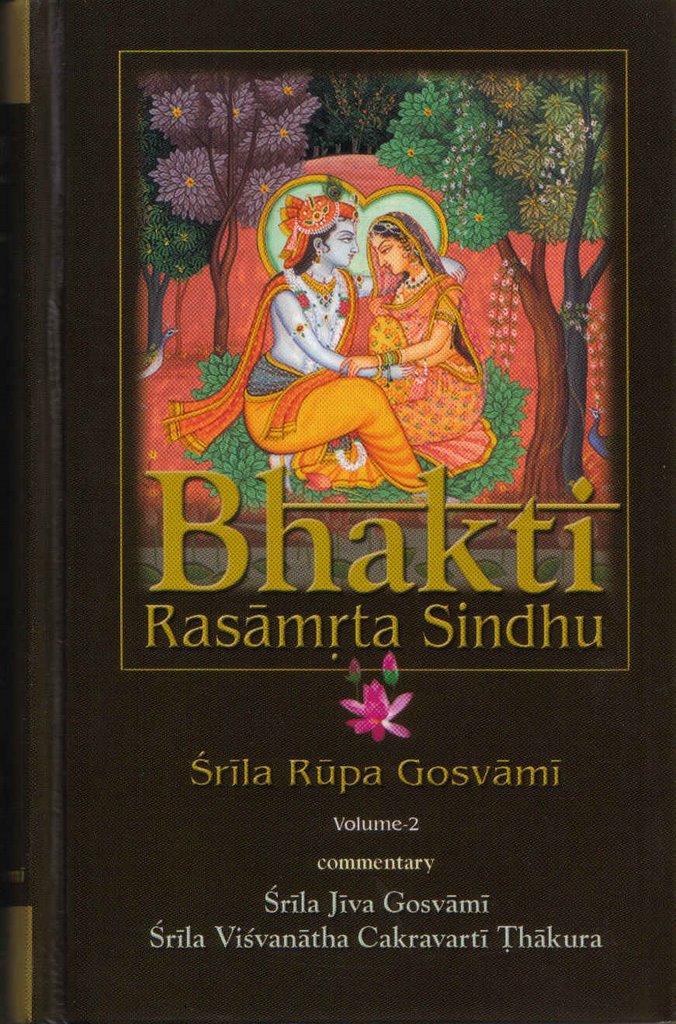
Friday, November 24, 2006

Sāmānya Bhakti


Bhakti Rasāmrta Sindhu 
with full commentary-translations by H.H. Bhānu Swāmi.

First installment of review, Chapter one, sāmānya bhakti.

Thanks to the generous donation of Mālati dāsī from Australia I am now the happy owner of the Bhakti Rasāmṛta Sindhu translation of H.H. Bhānu Swāmi, which I promptly and enthusiastically started reading. It comes in two volumes, the first one, east and south sectors, 959 pages, because here the tīkās are much longer, and the second one, west and north sectors, just 542 pages. A whopping 1501 pages altogether!

In his commentary Bhānu Swāmī doesn't seem to skip over any of the commentaries and has made very pleasant breaks between the different topics in the commentaries, making them very readable and surveyable. Wisely, he has kept out the ṭīkās of Viśvanātha Cakravartī that are verbatim copies of Jīva's (I never understood why Viśvanāth did that copying - was it out of pure allegiance?). His own added footnotes seem to be in context and to the point. The ṭīkā of the first verse is very lengthy, no less than 15 pages, and Bhānu expertly discerns which Bhāgavat-quotation by Jīva Gosvāmī pertains to which attribute of Kṛṣṇa's found by him in the śloka, though this is not easy to discern in the Sanskrit ṭīkā.

In the pivotal verse 1.1.11, "anyābhilāṣita śūnyam", Bhānu Svāmī unfurls the secrets of Jīva's commentaries, which were only explained very briefly by Habermann (actually, all of Habermann's comment-translations are too brief). A single line in Jīva's ṭīkā becomes an entire paragpraph in Bhānu's English commentary, not including Bhānu's patient and impressive footnotes. Bhānu's translated ṭīkās look very impressive and credible too, though some of Jīva's original Sanskrit  ṭīkās are so cryptical we will just pray that Bhānu understood it properly. I could not tell either way. The simple Sanskrit line 'sattvāsattve tu parasparam upamardditvācceṣṭāntargata eva', for instance, carries this lengthy translation: "However, emotional states of sattva, and even non-sattva, are included in ceṣṭā rūpa anuśīlanam (active devotional service) because both are suppressed by action (sattvas are intense emotions, which overcome the heart, but under the pressure of a limited body, spontaneously manifest bodily transformations (action) called sāttvika bhāvas. Even though the action is unconscious and the origin is emotion, it is classed as ceṣṭā rūpa because of the consequent and obvious active element. Other emotions, which are not so intense, and are not classified as sattvas, if they are similarly eclipsed in favor of conscious actions, are called anubhāvas. Though the immediate cause is emotion, anubhāvas are classed ceṣṭā rūpa because of preponderance of conscious action." Footnote: "sāttvika bhāvas have a strong internal emotional component called sattva, which forcibly interacts with prāna, which in turn affects the elements earth, water, fire, ether and prāna (air) in the body, which causes external symptoms in the body, voice and mind. Because they are not conscious actions, though they involve action, they are distinct from anubhāvas." Speaking of 'hidden meaning in the śāstras/Gosvāmīs writings!! All I could read in the one-line Sanskrit ṭīkā was: 'Whether sattva or non-sattva, because they suppress each other, they are counted among ceṣṭā rūpa anuśīlana." Studying the whole book may take a long, dark winter!

Further on in the 1.1.11  ṭīkā Bhānu translates Jīva: 'Thus aṅgas of bhakti such as taking shelter of Guru's lotus feet may be included in bhakti, even in bhāva-rūpa anuśīlanam', to which he makes the footnote: "Though these other items are mentioned in preliminary stages of bhakti (ceṣṭā rūpa) the inclusion of service to things related to Kṛṣṇa in anuśīlanam applies even at a more advanced stage, in bhāva rūpa bhakti. This subclass of ceṣṭā rūpa bhakti on the advanced level is called kārya rūpa (perfectional stage) and such actions are called anubhāvas. This is explained in the commentary on BRS 1.3.1."

Bhānu Swāmi also properly translates Jīva Gosvāmī's comment on BRS 1.1.22, writing: "Now it is a fact that the sinful person dissolves the prārabdha karmas producing bad birth and qualities which are unfavorable for conducing sacrifice. But since he does not have the second birth because of lack of virtuous behaviour (if he actually wants to perform sacrifices) he must take another birth in the future and then undergo the second birth-rites which will bestow the particular purity which will destroy the lack of qualification inherent even in sons of brāhmaṇas. In that sense, commenting on the words savanāya kalpate in BRS verse 1.1.21 (quotation from SB 3.33.6), Śrīdhara Swāmī says 'being immediately qualified for sacrifice means that he is given the respect due to a qualified person."

Jīva's  ṭīkā to verse 1.1.23 mentions that karma is anādi (beginningless, and thus we did not fall down from the spiritual sky), tat-tac-cānādi-siddham, and Bhānu not only neatly translates it, he even repeats it in a footnote (40:"The karma is anādi because the jīva's existence in the material world is anādi").

In the Bhāgavat 3.33.6 verse quoted in verse 21 sins are said to be destroyed at once (sadya), but in verse 23 it is said kramena, gradually. Jīva Gosvāmī explains that with the kamala-patra-śata-vedha nyāya: When one pierces 100 lotus petals it takes some time before all 100 leaves are pierced, though on the surface it seems they are all pierced at once. Similarly, in the eternal existence of the jīva, endless time, it is happening at once, though in our limited time-view it seems to be happening gradually. It is another good example of Jīva Gosvāmī rejecting literalism, and in the same Bhāgavata- ṭīkā (3.33.6) where he also rejects the notion that a chanting dog-eater can actually perform a fire sacrifice.

In verse 29, the famous yasyāsti bhaktir bhagavad akincana-verse, Jīva Gosvāmī gives another explanation of the words samāsate sura than the conventional 'all the qualities of the demigods are in him". He says that the word samāsate means vaśībhūta, controlling. Bhānu translates it as follows: "...bhakti puts at the command of the devotee all good qualities, the Lord and others as well. sura refers to the Supreme Lord and others (Jīva says that in the ṭīkā, surā bhagavadādayaḥ). samāsate means they remain under his control." In his footnote, Bhānu writes: "If bhakti gave only the qualities of the devatās that would not be remarkable. Even devatā-worshippers can obtain these qualities, which will be predominantly material sattva guna....."

The ṭīkā to 1.1.35 solves the mystery of how bhakti is rare in two ways, since it only says that it is rare if one continues with a huge amount of sādhana without attachment (such as pramāda japa). Jīva Gosvāmī says it is even rarely attained when one practises it with attachment, though there is then a delay instead of non-attainment. Jīva offers consolation in the following tīkā for those who may despair after reading this, quoting several Bhāgavat-verses that assure easy and quick success. After quoting SB 11.14.20, na sādhayati mām yogo, he explains that 'tad artha viniyukta karmādikam evocyate. ataeva sādhana śabda eva vinyasto na tu bhajana śabdaḥ'. "bhāva bhakti is rarely attained by those who employ karma and other such practises in their endeavour. That is why the word sādhana is used in verse 35, not the word 'bhajana.'

Thus ends the first installment of the review of Bhanu Swami's translation of Bhakti Rasamrita Sindhu, dealing with chapter one of the eastern sector.

Saturday, November 18, 2006

Gaur Līlā Eternal


I found this exchange on Vilāsa Kunja:

QUOTE(Madhavananda Das @ Nov 17 2006, 02:57 AM)
I do not know why you bring in the topic of non-eternity of Gaura-lila in this context; while the topic has only recently surfaced on the internet, the issue itself is old. The first related documented controversies in the samaja date approximately one and a half centuries back. The Gaura-lila issue has only been brought up by Advaitadas, who follows the views of his guru and param-guru on this topic.


Gaurasundar: Speaking of which, I was under the impression that Advaitaji's views were based on his sampradaya's unilateral focus on Radha-Krishna (with it's accompanying disapproval/de-emphasising of Gaura-smaran/puja). I had no idea that the "No eternal-Gauralila" was an active feature of his sampradaya too, is this what you are saying?

I would like to offer the following comments: 'Sampradāya' means the tradition on the whole, which means the Gauḍīya Vaiṣṇava Sampradāya, whose authorised theologists are the Six Gosvāmīs. Through these authorised theologists the Sampradāya has emphasised the worship of Rādhā-Kṛṣṇa and also acknowledged that this is the great gift of Śrīman Mahāprabhu. The shift to a bigger role of Śrīman Mahāprabhu in one's worship has been introduced by various personalities in the not so distant past, namely the 19th and even 20th century (as mentioned above). As for there being 'no eternal Gaura līlā', I do not know why such ideas are being ascribed to me and my Guru paramparā, I have never said anything of the kind. When I asked my Gurudeva about the sthiti of Gaura he said it is eternal, but not present in the spiritual sky, rather it is rotating like a firebrand throughout the mundane universes, each of which have a planet earth, each of which have a town of Navadvīpa. As Śrīman Mahāprabhu is svayam Bhagavān, naturally His attributes, pastimes and form are eternal, that goes without saying. Except for one or two poetic eulogies in Bengali song or prose booklets, indeed no major Gauḍīya Vaiṣṇava śāstra describes a planet of Śrīman Mahāprabhu in the spiritual sky. Holding on to paramparā-given practises is not a question of 'de-emphasising', as we are not obliged to go along with practises that have been introduced by others at a later stage.

Friday, November 17, 2006

The spider and its web


The spider and its web

From Kānupriya Gosvāmī's 'Jīvera Svarūpa o svadharma'

'Through his own energy the spider expands his web and withdraws it again. Though the spider is not fixed in one place (and not always present on the web, ed.) he is not false or unreal. Similarly, although the universe is temporary it is not false like a dream; it is simply a transformation of the Lord's energy, called maya or matter. Just as the spider's offspring can freely traverse the web without getting entangled in it, because they are of the same substance as the spider, but its enemies, like flies and other insects, get bound by it and die, liberated souls can freely traverse the Lord's material creation without getting entangled, while those who identify with the body and who are opposed to Him get bound to it. The srutis (Upanisads, that are usually considered 'impersonalist' scriptures, ed.) accept the reality of the world and have also clearly described the creation as a particular energy of the Lord:

yathornaṇābhih sṛjate gṛhnate ca yathā pṛthivyām oṣadhayaḥ sambhavanti
yathā sataṁ puruṣāt keśa-lomāni tathākṣarāt sambhavatīha viśvam

(Mundaka Upanisad)

"Just as a spider spreads a web from its own body and withdraws it again, the earth brings forth herbs and a living being sprouts hairs from its pores, so also this universe is born from the akṣara (the imperishable)."
Ref.: S.B. 2.9.26-27, 3.21.19 and 11.9.21

Tuesday, November 14, 2006

Criticism or offence - where to draw the line?

I received some pretty heated comments recently, and today this comment came in so it is perhaps a good opportunity to set the record straight. Dr.Phil wrote this:

An off-topic question... On the one hand I consider you senior, on the other hand I sometimes see contradiction in you. I never intend to offend anyone or hurt anyone. When does asking questions in an unorthodox way become offensive ? When becomes critique offensive ? Where to draw the line ? I for example use bold language in speech which can easily be misinterpreted as an attack. I try to be more subtle and polite but it is not easy. Your criticisms are also by many (mis)understood as being offensive. Where do you draw your line ? How tough can we be in speech ? How hard can our line be in defending the truth, while we our liable to make mistakes. Maybe in the future you can devote a post on this topic. I am also interested in the viewpoints and experiences from the respected visitors on this blog. We all had our clashes and had to find a balance.... between shutting up, standing up, admitting mistakes and maybe even forgiving an offense or asking for forgiveness for offenses committed by ourselves. Forgive me any offense at your feet. And maybe you can shed some light or share experience, in your own time when you feel like it. (you can, but don't have to post this comment)

My response, here in public:
Dear Phil, I have the same problem indeed. My criticism or just plain comparisons between recent teachers and the foundational acaryas (the Six Gosvamis in particular) are often seen as offensive. I have also needed time to learn where to draw the line, and I have withdrawn, on the recent advise of Satyanarayan Prabhu, from off the internet into the private realm with this type of comparitive criticisms. Still I am reaping the fruits of previously made comments on the internet, as I experienced recently with a spate of unpleasant comments by readers. I have also learned to show some respect to teachers that I really dont agree with or that I even really dont appreciate personally, because some of them have a huge flock of followers, some of whom do not know the border between devotional indignation and dangerous fanaticism. The internet is a world wide web and there is no telling as to how many (sometimes dangerous fanatic) people actually surf to one's weblog. My opinion is that one should speak out frankly but without mentioning people by name and without insulting people, and as much as possible in the private realm. Otherwise one may disturb devotees' tender faith in their devotional leaders prematurely and thus do more harm than good. I may have caused such disturbance in the past, for which I offer my apologies once more. And yes, indeed, I can at least speak for myself that I am still in the process of learning, so some of my past criticisms have been misplaced, and I may well realise that for other points in the future as well.

Sunday, November 12, 2006

vairāgya needed?

Srī Kānupriya Gosvāmī, Jīvera Svarūpa O Svadharma:

bhakti śāstre evaṁ bhaktaganera ācaranera o upadeśera madhye-o ye bahula parimāne sutīvra samsāra vairāgya-bhāva paridṛṣṭa hoy, tāhā kevala bahirmukha -viṣayāsakta o moha-grasta jīva sakalera mohanidrā bhanga koribāra janya evam pravṛtta bhakta o sādhakadigake sādhana pathe satvara agrasara hoibāra utsāha pradāna koribāra janya bujhite hobe, yehetu 'jnāna vairāgya bhaktira kabhu nahe anga' (CC Madhya 22). nidrita vyakti sahita tāhāra kona-o paramātmīya, madhura ālāpādi dvārā tāhāke ānanda dāna korite āsileo, yemon tāhāra nidrā bhangera janya prathame kathin o karkaśa śabdādi dvārā tāhāke jāgrata korite hoy, tadrūpa visaya madirā pāne nidrita o nirutsāhi jīvake krsna bhajane utsāhita karāi bhakti-pathera tīvra vairāgya vānīra abhiprāya.

"In the devotional scriptures and in the conduct and instructions of the devotees we see many examples of extreme renunciation from material life, but that is only to awaken the conditioned souls who are in the grip of illusion, being attached to sensual enjoyment. It is also meant to enthuse practising devotees who are somewhat attached to material life (pravṛtta) to speed up their progress on the path somewhat. After all, the Caitanya Caritāmṛta (Madhya 22) says: "Neither renunciation nor knowledge are integral parts of bhakti". It may be possible to please a sleeping person with sweet, confidential words, but to wake him/her up in the first place one first needs to make a loud shrieking noise. Similarly one must speak words of stern renunciation to persons that are drunk with the wine of sensuality or who are complacent about worshipping Kṛṣṇa."

Corroborations:
Rūpa Gosvāmī, Bhakti Rasāmṛta Sindhu 1.2.249

jñāna-vairāgyayor bhakti-praveśāyopayogitā
īṣat prathamam eveti nāṅgatvam ucitam tayoḥ


'Knowledge and renunciation are helpful for entering the path of devotion, but only in the very beginning. They are never integral parts of devotion."

Jīva Gosvāmī's commentary:
prathamam evety anyāveśa-parityāga-mātrāya te upādīyete tat-parityāgena jāte ca bhakti-praveśe tayor akiñcitkaratvāt tat-tad-bhāvanāyā bhakti vicchedatkatvācca

'"In the beginning" means: only to help the person give up other (mundane) absorptions. Knowledge and renunciation are only marginally helpful in entering the path of devotion. Meditating on these things form an obstacle to devotion."

verse 1.2.250:
yad ubhe citta-kāṭhinya-hetū prāyaḥ satāṁ mate
sukumāra-svabhāveyam bhaktis taddhetur īritā

'Both cause the heart to be hardened, while Bhakti itself is very tender by nature."

Verse 1.2.251:
Quote from S.B. 11.20.31: "Therefore, knowledge and renunciation are generally not the best means for the yogi who is full of devotion for Me and whose mind is fixed on me."

And:
anāyāse govinda bhajibo (Narottam, Prema bhakti Candrikā 21) "I will effortlessly worship Govinda"

Sādhu bābā disapproved of dry renunciation. he rhymed : Betā - khā, por, bhajan kor" 'My child, eat and dress and do bhajan."

The point of all this? I was deeply impressed with the truth Kānupriya Prabhu thus revealed to me this morning. It reminded me of my blog of 1st november, "Failed Parīkṣā." Perhaps I am taking it all way too seriously and should just chill out a bit?

(Corroborations were added by advaitadas, and are not a part of the text of Kanupriya Gosvami)

Friday, November 03, 2006

Bhakti Rasāmṛta Sindhu comes clean - finally.


After the "Nectar of Devotion" (1969) and Dhanurdhara Swāmi/Victor di Cara's sequel 'Waves of Devotion', it seems the ISKCON-branch of our sampradāya finally has access to a proper representation of Śrīla Rūpa Gosvāmī's 'Bhakti Rasāmṛta Sindhu', translated this time by Bhānu Swāmī. I could only have a brief look at it in the Jīva Institute the day of my departure from India, but in that brief time I naturally curiously browsed to verses 1.2.291-309, and was glad to see that eligibility for rāgānugā bhakti and the difference between it and rāgātmikā bhakti are finally properly presented. Most interestingly, in one of the many footnotes (the one of 1.2.295) it is actually acknowledged that the siddha deha is received from the Guru and the manuals of Gopāl Guru and Dhyānacandra are mentioned. This is not a review (yet), just a preview, because the book is very big and expensive so I didn't buy it. It appears to me at first sight that the complete commentaries of Jīva Gosvāmī and Visvanātha Cakravartī are included, without the original Sanskrit text, but that is no problem because I have these already anyway. By coincidence the only book I brought from India this time is the Bhakti Rasāmṛta Sindhu, but then the Bengali edition of the Gaudiya Math.

Wednesday, November 01, 2006

Failed parīkṣā

I suppose that going to Rādhākund is all about passing the test of tolerance - blasting loud music (Rām-nām, mayoral elections, Bollywood), pert kids, monkeys tearing your clean clothes off the line, no water due to a broken pump, ants pervading your (and Giridhārī's) meals, strangers passing stool in your toilet without even flushing, or stealing your precious water, mosquitos stealing your night's rest, the nicest guys turning out to be rip-offs, always having to lock the door against monkeys, rats and mosquitos, frequent power cuts , too hot to cook a meal (the gas-stove requiring the fan to be switched off), being sick without a nurse around - none of this I tolerated - so far for taror iva sahiṣṇunā. As for tṛṇād api sunīcena - during my whole trip I felt indignation about a bābājī (who are themselves not all famous for their high birth) telling me to sit separately from the others. That test I also failed. This isn't dhyāna-bhūmi (a land of meditation) either - how can you meditate when you are caught between two gangs of big monkeys, ready to tear each other apart? This country is just about tolerating the intolerable. I get the feeling Madangopāl and Sādhu Bābā will not be pleased with me unless and until I pass these tests - and not just for a few weeks but permanently.

Monday, October 16, 2006

Mahāprabhu's own words

ekadā śrīvāsādi yoto bhaktagana
mahāprabhura guṇe gāya korena kīrtan

"One day Śrīvāsa and the other devotees sang the glories of Mahāprabhu in kīrtan"

śuni bhaktagaṇe kohe sakrodha vacane
kṛṣṇa nāma guṇa chāḍi ki koro kīrtan?

When Mahāprabhu heard it He angrily said: 'Why are you abandoning Kṛṣṇa kīrtan? What are you singing?

auddhatya korite hoilo sabākāra mana,
svatantra hoiya nāśābe bhuvana

"Everyone has become so arrogant! This independent behaviour will destroy the world!"

(Caitanya Caritāmṛta, Madhya 1, 269-271)

āmā prati sneha yadi thāke sabākāra
kṛṣṇa nāma vinā nā gāibe āra

"If you all really love Me, then sing of nothing but Kṛṣṇa!"

(Caitanya Bhāgavata)

Thursday, October 05, 2006

Continued debate on Gaura Nitya Līlā

The ongoing discussion on Gaura-nitya lila et al:
Mādhava writes in Vilasa kunja 30 september 2006-

Mādhava: "The friction arises to a great extent from the fact that the Gosvāmīs themselves wrote very, very little of Mahāprabhu at all, what to speak of touching on the specifics of Gaura-upāsanā and līlā.

Advaitadas: "This provides food for thought. Shouldn't we follow suit and thus be real rūpānugīs? Their format should be followed: They offered obeisances to Gaura once in the invocations of their books and then spoke of Rādhā-Kṛṣṇa all the way.

Mādhava: "ārati-songs for Gaura and so forth are also in practise in the line Advaitadas belongs to.

Advaitadas "That is precisely the Gosvāmīs`program - obeisances to Gaura once and then just Rādhā-Kṛṣṇa. Also our adhivāsa kīrtans are the same as in the other lines - Gaura all the way. But this is sādhana bhakti!

Mādhava: In general, there is evolution in mantras in the sampradāya - additional mantras are often learned from śikṣā-gurus and passed on to others.

Advaitadas: When you speak of evolution, isn't that like the `bold innovators` we have left other groups for? Can we call a line that `evolves` like that still a paramparā (succession)? Isn't succession meant to be unchanging?

Mādhava: On dīkṣā-mantras, the Hari-bhakti-vilāsa only mentions Kṛṣṇa-mantra and Kāma-gayatri, with passing mention of some Rāma- and Nṛsiṁha-mantras. Gaura goes undiscussed in the work (as does largely Rādhā), for it seems to be aimed at the broadest audience, not only Gaura's followers.

Advaitadas: This is untrue. In Caitanya Caritāmṛta (Madhya 24) Mahāprabhu gives elaborate instructions to Sanātan Goswāmī about the compilation of Hari-bhakti-vilāsa  It has a Gaura maṅgalācaran and is a distinct Gauḍīya Grantha. As Gaura mantra is not there and you admit the mantra`s been in use for just over a century, the conclusion is clear.

Mādhava: Curiously, Gaura-mantra is spoken of in Advaita-prakāśa, one of the very esteemed texts in the line of Advaitadās.

Advaitadas: "This I have already explained on Gaudiya Discussions and on my website www.madangopal.com: It was a procreative mantra meant only for Śacī-mātā and Jagannātha Miśra. Otherwise, it would have been received by us all nowadays, but it isn't.

Madhava: The existence of Gaura's nitya-līlā as an aprakaṭa-prakāśa is questioned. It has not been specifically addressed in any foundational works of the sampradāya, but there is no reason to assume it couldn't be there for those so willing.

Advaitadas: Can it be a spiritual reality without being mentioned in any authorised śāstra?

Thursday, September 28, 2006

Sinning in ignorance and Gaur-līlā - Satya-Nārāyan Dās

I ask Satya Nārāyana Paṇḍitjī about nāmāparādha and sinning in general in ignorance. He says nāmāparādha in ignorance is not as severe as deliberate nāmāparādha  He compares it to the woman with the baby who contaminated the kitchen , causing me to decide not to use the kitchen anymore. She displeased me, be it in ignorance, and that is just what aparādha is: displeasing. So it is with inadvertent nāmāparādha  He agrees with my point of ignorance being an excuse (see my blog of April 19) He says that in Manu Smṛti greater punishment is given to a brahmin for drinking alcohol than to a śūdra, for instance. An insane person who commits murder is not punished as harshly as a deliberate murderer. It is the intention that counts. Punishment has a purpose, it is a lesson. So yes, a westerner is not punished for drinking and meat-eating as a Hindu or Vaiṣṇava is.

About Gaura līlā he says that the personality of Gaura won't be perceived anymore as one immerses oneself in Rādhā-Kṛṣṇa līlā, but the spirit of Gaura, in which one has done Rādhā-Kṛṣṇa sādhana, will remain forever.

Satya-nārāyan Paṇḍitjī confirms that disputes have always been there in the Gauḍīya Sampradāya, though they have not been mentioned in the Gauḍīya granthas.

Tuesday, September 26, 2006

Evaporation of Gaur-līlā and the mundane Name

Vṛndāvana, September 25, 2006
Yesterday-evening I had a wonderful darśan of one of the senior-most scholars and mahātmās of Vṛndāvana. I ask him two questions. First about Bhaktivinode's statement that Gaura is to be worshipped up to the stage of ruci. He says it is up to the stage of āsakti, which is a near-twin of ruci, but the most interesting thing is that he DOES confirm that Gaura-worship evaporates at a certain stage because Rādhā-Kṛṣṇa is the sādhya. Then, at bhāva and prema-bhakti it is Rādhā-Kṛṣṇa-worship all the way. In a sense Gaura-līlā is nitya because Mahāprabhu thinks of Himself as a sakhī, mañjarī, or Rādhā, but for the sādhaka it dissolves (vismṛti, he forgets) at the stage of āsakti.

I then ask him about the theory that the holy name consists of mundane syllables if pronounced by mundaners. He confirms it, saying that the 10 offences also count for non-devotees, even though they don't know them, just like a child can be cured by medicine inside a sweet, unknowingly it will work anyway. He then quotes Bhakti Rasāmṛta Sindhu (1.3.4)

āvirbhūya manovṛttau vrajanti tat svarūpatām
svayaṁ prakāśa-rūpāpi bhāsamānā prakāśyavat

"Bhāva
(created by either rāga- or vidhi-sādhana) manifests within the mind, making it attain its real form. Though it is self-manifest by nature it appears to be manifest by the mental faculties."

Bhāva does not manifest in a mundane mind. hari-nāma is similarly self-manifest but it won't sprout on the barren ground of a non-devotee's heart."

Edited (title changed) July 28, 2008

Sunday, September 17, 2006

Spirit of Subal penetrates Vrindavan

Deity's Modern Attire Creates Disturbance
BY: STAFF CORRESPONDENT

Sep 16, VRINDAVAN, INDIA (IANS) — Priests at the Bankey Bihari temple in Vrindavan yesterday dressed up the main deity in modern attire, sparking massive protests. Priests at the temple dedicated to Lord Krishna, at the request of some fun-loving devotees, gave the deity on Thursday a modern look, complete with jeans and a shirt and wielding a mobile phone. Activists of groups like Bajrang Dal and Vishwa Hindu Parishad (VHP) termed the move blasphemy and burnt effigies of the priests. They demanded that those who defiled the sanctity of the temple be punished. Sanskrit scholars like Chandan Lal Parasher and Nirmal Giri of the Kailash temple here criticised the wanton callousness of the Vrindavan priests. The Rashtriya Lok Dal and Brahmin Sabha also organized similar protests. Some have called for the sacking of the priests.

Sunday, September 10, 2006

Familiarity breeds contempt

Everything is there in the Bhāgavata, including all folk wisdom. Today a friend quoted me this splendid verse of the Bhāgavata, about familiarity, and I like to share it here:

sannikarṣo hi martyānām anādaraṇa kāraṇam
gāngaṁ hitvā yathānyāmbhas tatratyo yāti śuddhaye

Nārada told the sages at Kurukṣetra (S.B. 10.84.31): "In the case of mortals, familiarity breeds contempt. It is like leaving the Ganges (while living on its banks) and going elsewhere for purification."

Tuesday, September 05, 2006

Śikṣāṣṭakam


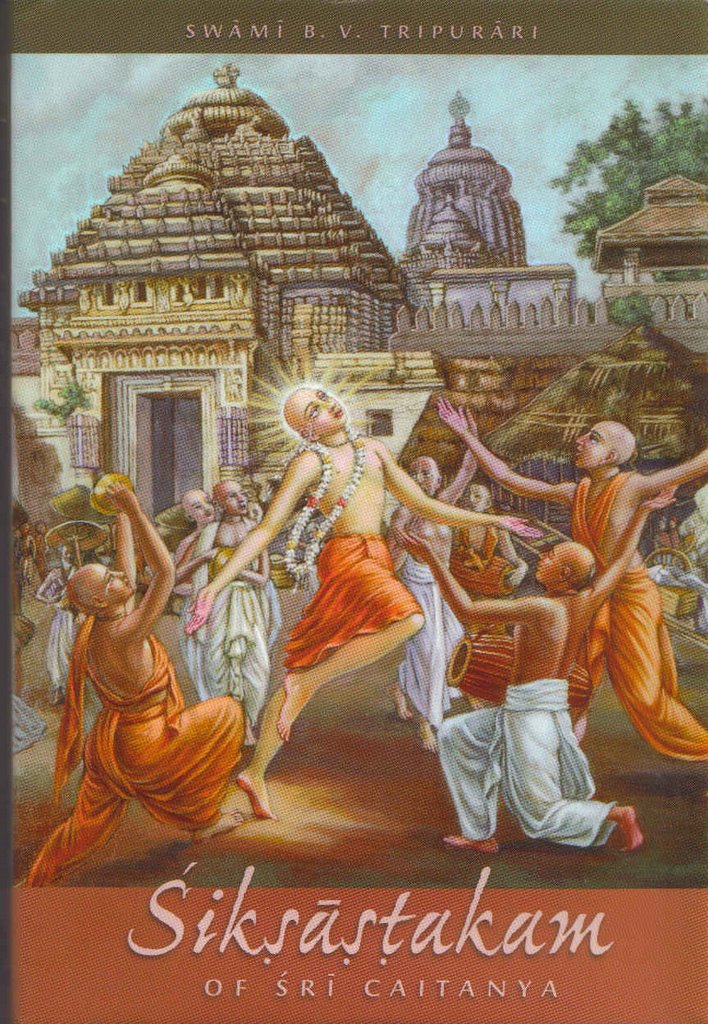
Sri Siksastakam by Swāmi BV Tripurāri

This booklet provides a very nice new elaboration on Mahāprabhu's 8 famous verses, though at various places Swāmījī did get inspired by Traditional Gauḍīya-teachings, notably in his comment on verse 5: On page 85 he makes the point of progressive revelation of the siddha deha based on SB 11.14.26, quoted from Rāgavartma Candrikā, which was first made on Gauḍīya Discussions a year or so ago. On page 86 he has quoted Narottama's āpnāra bhajan kothā nā kohibe yathā tathā and rākho prem hṛdoy bhoriyā, both cornerstone-teachings of Sādhu Bābā, quoted in his biography on my website, and on page 88 he has quoted the point Śrīla Ānanda Gopāla Gosvāmī made in his Vilāpa Kusumāñjali purports that kiṅkara(ī) means kiṁ karomi,"what shall I do?" He and a few other IGM sannyāsīs do have the habit of learning from, getting active support from and even quoting devotees that are considered taboo in their circles, without acknowledging them by name. This in itself is already not very honest, but unfortunately they (I am not sure if Tripurāri Swāmī does this too) sometimes even slam these sources as well, which is really far from proper Vaiṣṇava behaviour.

Interestingly, on page 85 Swāmījī interprets Rāgavartma Candrikā 1.9 to mean that saints, Guru or Supersoul can be alternative sources of the revelation of the siddha deha ("cultivating an inner spiritual identity"). This provides food for thought, though that is not to be literally found in the original text, nor from the context of the verse. The book does give a balanced and fair presentation of the siddha deha issue, which also raises questions about Swāmījī's sources, since the siddha deha-issue is shrouded with mystery, taboo and controversy in his circles. This booklet is fortunately more suitable to a devotee public than some of his previous publications which were clearly targeting the academics. Throughout the booklet Swāmijī gives a nice outline of Rūpa Goswāmī's rasa-tattva, which is badly needed in the western world.

Swāmī did make a few mistakes though. On page 73 he writes: "Although it is true that despite Kṛṣṇa's being primarily lost in love he nonetheless retains his Godhood and can thus hear the prayers of his sādhakas, one can legitimately ask at what stage of spiritual practice a sādhaka's prayers are capable of attracting Kṛṣṇa's personal attention and, furthermore, at what stage a sādhaka's seva becomes līlā-sevā, internal sevā that reaches Kṛṣṇa in his nitya-līlā. while some may insist that Kṛṣṇa personally listens to the prayers of his sādhakas at any stage of sādhana, Thākura Bhaktivinoda says, "The prayers of one who is a śaraṇāgata are heard by Śrī Nanda- kumāra." As we have already learned, śaraṇāgati is complete in the stage of ruci."

Interestingly enough, Tripurāri Svāmi states on page 74 that if one is disheartened by the fact that Kṛṣṇa Himself is not hearing one's prayers, the sādhaka should take solace in the fact that Mahāprabhu as Visvambhara is Jagadīśa (Paramātma) and Kṛṣṇa Himself. Therefore, the sādhaka should pray to Mahāprabhu, presumably until he reaches the stage of ruci when Vrajendranandana Kṛṣṇa Himself reciprocates with his prayers. This (typically Gaura-Kṛṣṇa bheda-buddhi-) theory cannot be verified independently. It is unacceptable that Kṛṣṇa really would not hear the prayers of anyone else but a surrendered soul. I do not know in which context Bhaktivinode says this (Swāmi quotes a song called aḍ aṅga śaraṇāgati), it may be meant as a statement of glorification but cannot be accepted as serious theology. Indeed, it is contradicted by the teachings of Viśvanāth Cakravartīpāda in Rāga Vartma Candrikā 2.1. Also, in the very end of the book (p. 128) Swami translates Svarūpa Dāmodara's famous rādhā bhāva dyuti subalitam naumi krsna svarūpam as 'Pranām to Gaura, who is endowed with Rādhā's countenance and personality'. Here 'Gaura' must be 'Kṛṣṇa'.

Page 73 furthermore contains the controversial statement that '...the baddha jivas are originally manifest from the Paramātmā', whereas from the Bhagavad Gītā it is clear that the jīva has no origin since it is beginningless - na tvevāhaṁ jātu nāsaṁ na tvaṁ neme narādhipāḥ (BG 2.12).
It is not clear what Swāmījī's source is for this theory.

As for the cover design, the artist should have been notified that before 1918 there were no saffron dhotis in the Gauḍīya Vaiṣṇava sampradāya.

The paragraph starting with 'page 73 furthermore' at the end of this blog is added January 13, 2009.

Saturday, September 02, 2006

Prema Vilāsa


While we were in Switzerland my friend Tarungovinda presented me with a copy of Bhūmipati's translation of Nityānanda Dās' 'Prema Vilāsa', which I read during my stay in the alpine āshram. The book itself is controversial enough; it narrates how Kṛṣṇadās Kavirāja died in front of Raghunātha dās Gosvāmī after he heard that his Caitanya Caritāmṛta was stolen by King Bīrhambīr, whereas he actually outlived Dās Gosvāmi for about 30 years.

There is a narration in there how Raghunātha dās Gosvāmī gave his Govardhana śilā and Gunjā mālā to Yadunandanācārya, who rendered service to them, and to Raghunātha Dās himself as well, at Rādhākund, whereas Yadunandanācārya was rather the guru of Raghunātha dās Gosvāmī, and never lived at Rādhākund, nor ever worshipped the Govardhan śilā and Gunjā mālā. Apart from that, the Prema Vilāsa is consistently anti-brāhmana, which is even aggravated by Bhūmipati dās, who was also not exactly brought up in brāhmana-friendly circles. He says that Haridās Thākur gave dīkṣā to a brāhmana named Rāma Dāsa, while the text (already biased against brāhmanas, so who knows if this story is as 'true' as the above-mentioned ones), says: tār śiṣya hoiyā viprer hoilo suddha-mati "The brāhmana's mind was purified by being Haridās' śiṣya." The word śiṣya means both 'pupil' and 'disciple', so we presume it is pupil, since Haridās Thākur is known for having no disciples at all, let alone brāhmanas.

On rāga mārga Bhūmipati writes on page 179: "Before practising rāga bhakti one must make sufficient spiritual advancement. That path is not for everyone. As long as one works under the jurisdiction of the Vedic rules and regulations one cannot serve Kṛṣṇa with spontaneity. Still, one should practise regulative devotion until his heart is firmly attached to Kṛṣṇa  Only then can he practise rāga safely." Though the original text does give a caution against whimsical speculations, the above text is nowhere in sight and originates from Bhūmipati's upbringing too.

Furthermore Prema Vilāsa mentions that Vīracandra's boat was torpedoed by Abhirāma Thākur's flute when he crossed the Gangā to take dīkṣā from Advaita Prabhu, while the Advaita Prakāśa says that he was sent back by Advaita Prabhu himself.

Having said all this, Prema Vilāsa should not be dismissed as a baby with the bathing-water either - it does provide many details about the lives of Narottama, Śyāmānanda and Śrīnivāsācārya. Also on a positive note, the book repeatedly mentions the kāma gāyatrī as a dīkṣā-mantra and mentions (chapter 24, page 276) that those in the Advaita Parivāra (Mādhavācārya or Mādhavī sakhī) serve in the yūtha of Visākhā sakhī.

Advise: read with caution, then enjoy.

Friday, September 01, 2006

Śrī Rādhāṣṭamī 2006


anulikhyānantān api sad aparādhan madhupatir
mahā premāviṣṭas tava parama deyaṁ vimṛśyati
tavaikaṁ śrī rādhe gṛṇata iha nāmāmṛta rasaṁ
mahimnaḥ kaḥ sīmaṁ spṛśatu dāsyaika manasām

(Rādhārasa Sudhānidhi – 155)

"O Śrī Rādhe! Madhupati (Kṛṣṇa) cancels innumerable offenses of anyone who even once relishes the nectarean spiritual flavour of Your name, and in great ecstasy He considers what is the greatest gift He can give to such a person. Who can then imagine the glories of someone whose mind is fixed on becoming Your maidservant?"

Thursday, August 31, 2006

In memoriam: Krishnā Dās

Today I received the sad news that my seniormost Guru-sister Krishnā Dās has passed away, on Tuesday, August 8th, 2006 at 5.25 a.m. local time due to diabetes. Her cremation took place on August 11th. She was born as the first of 7 children of Śrīpād Niranjan Prasād Dās in East Bengal, around the time it was partitioned from India and ceded to Pakistan, in 1947. Around 1960 the family moved to West Bengal, where they settled in Navadvīpa dhāma. Krishnā dās studied Sanskrit in Calcutta when her father met Srī Sādhu Bābā. She gave up her career prospects and joined Bābā in his then very austere āshram, becoming his first ever disciple in 1971. She started with menial services like washing pots, but gradually became Bābā's most trusted confidante, to the extent that Bābā authorised her to give dīkṣā on his behalf after his departure. She has faithfully done that for the last 20 years of her life. As a single woman she bore the heavy responsibility of managing Sādhu Bābā's āshram, organising all the festivals that are held there singlehandedly. As a life-long nun she is survived only by her 94-year old father (!)

Wednesday, August 30, 2006

Hidden motives

I read on another blog that bloggers blog to expose themselves almost narcistically for fame and prestige, to gather followers and admirers or even to seduce women. That is food for some deep introspection. My conscious motive was to get a link to the outside world, as I am physically quite isolated here. I suppose that even if bloggers, yours truly included, have vāsanās (subconscious motives) for fame, women and money, it is still worthwhile to read and write blogs because when one has a lot of knowledge it is one's duty to share the same with the wider world, and if one is unable or unwilling to travel the globe to preach one can still offer a contribution to a world which is suffering from ignorance. Also in the comments box and in its ensuing discussions, the proud blogger is able to learn lessons from his commentators......

Monday, August 28, 2006

rahasya kathā sankat


(Tarun and Advaitadas during kirtan in Spiringen templeroom)


It is hard for a lecturer to facilitate everyone - some members of the audience may not at all be ready for mañjarī bhāva and other types of confidential topics while others (including the lecturer) may be craving for this kathā. I found myself sometimes facing such a mixed audience, perhaps a bit like Śukadeva when he lectured to Mahārāja Parīkṣit's assembly. Kṛṣṇadās Kavirāja faced the same dilemma when composing Caitanya Caritāmṛta (Adi 4.231-232) :


e sab siddhānta gūḍha - kohite na juwāy; na kohile keho ihāra anta nāhi pāy. 
ataeva kohi kichu koriyā nigūḍha; bujhibe rasik bhakta nā bujhibe mūḍha.

"These topics are all confidential and should not be discussed, but on the other hand, if they are not discussed no one will know of them. That is why I will speak some confidential topics now - the rasik devotees will understand but the fools won't."

Of course one has to judge each individual audience, not that one reveals this to a large audience of ignorant novices and just one qualified rasik. In my case here, I decided to take the risk, like Kavirāja Gosvāmī did.